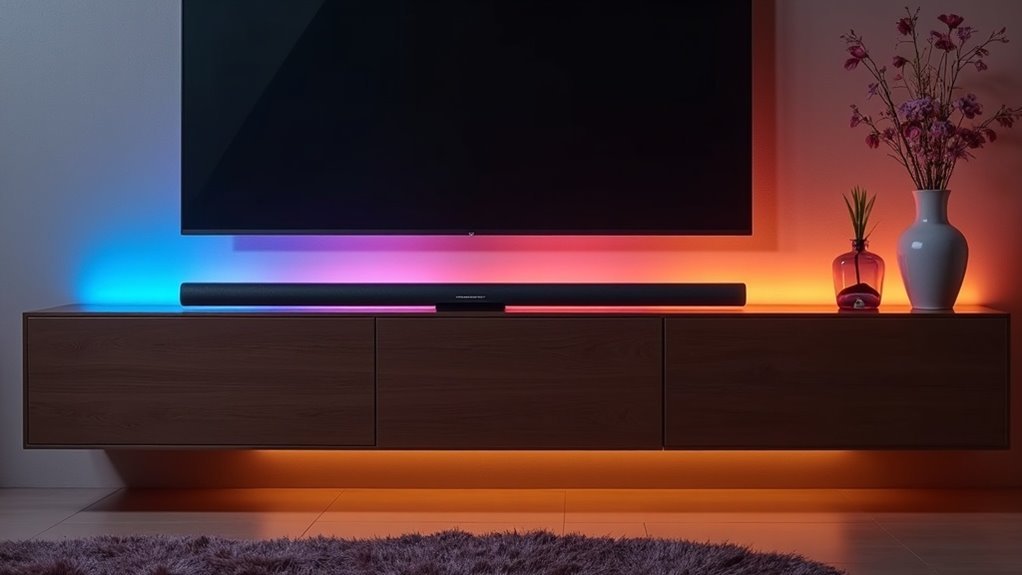
Yes, soundbars are repairable, but the feasibility depends on the specific problem and the model’s complexity. Common issues like connection problems, distorted audio, or sync discrepancies can often be fixed with troubleshooting. However, persistent malfunctions might require professional assessment or even replacement, especially for high-end models. Evaluating the cost of repair against the benefits of modern upgrades can guide your decision. Explore the common issues and solutions you might face with soundbars for better insights into their repairability.
Key Takeaways
- Many soundbars are repairable, particularly when the issue is related to faulty cables or connections rather than internal components.
- For high-end models, professional repairs might be necessary due to their complex technology and intricate internal parts.
- If the cost of repairs exceeds 50% of the original price of the soundbar, it is often more economical to consider replacing it.
- Regular maintenance and firmware updates can help prevent issues that require repairs and can extend the lifespan of the soundbar.
- Ongoing malfunctions may suggest it’s time to invest in a new soundbar, especially if the device struggles to support modern audio formats.
Common Soundbar Issues and Their Causes
When your soundbar suddenly stops producing sound or starts distorting audio, it can be frustrating, especially if you rely on it for an immersive entertainment experience.
Common sound quality issues with soundbars often arise from connection problems or faulty cables, disrupting audio output. Incorrect settings or hardware malfunctions may also contribute to these challenges.
Common soundbar issues stem from connection problems, faulty cables, or incorrect settings, all of which can disrupt audio output.
Advanced soundbars, while offering superior features, may experience higher malfunction rates due to their complex technology.
To mitigate these issues, regular firmware updates are crucial. By maintaining your soundbar and addressing potential problems proactively, you can ensure a reliable audio experience and effectively extend its lifespan.
Troubleshooting Steps for No Sound
First, check all cable connections to ensure they’re secure and free from damage, as loose or faulty cables can lead to sound issues with your soundbar.
Next, adjust the audio settings on both your soundbar and the connected device to confirm the volume is up and not muted.
Following these steps can often resolve the no sound problem before considering more complex solutions specific to soundbars.
Check Connections Securely
To resolve sound issues with your soundbar, start by verifying that all cable connections between the soundbar and your TV or audio devices are secure and undamaged.
Pay special attention to the HDMI ARC connection, as a loose or damaged cable can lead to significant problems with sound output.
Next, confirm that the correct input source is selected on the soundbar and ensure that volume levels on both devices are turned up and not muted.
Power cycling all devices by unplugging them for at least a minute can help refresh connections.
Finally, check your TV’s audio settings to ensure they’re configured to output through the external speakers.
Adjust Audio Settings
Adjusting audio settings is crucial for troubleshooting sound issues with your soundbar, particularly if you’re experiencing a complete lack of sound.
Start by ensuring that your TV’s audio output is set to the soundbar instead of the internal speakers. Then, verify that the input source on the soundbar corresponds with the TV’s output—whether it’s HDMI ARC, Optical, or Bluetooth.
Make sure the volume levels on both the TV and soundbar are adequate and not muted. If problems continue, try power cycling both devices by unplugging them for one minute.
If you’re utilizing Bluetooth, ensure that the soundbar is in pairing mode and not connected to other devices.
Resolving Bluetooth Connection Problems
To resolve Bluetooth connection problems with your soundbar, begin by verifying that your device is compatible and that the soundbar is set to pairing mode.
Signal interference from other electronics can disrupt connectivity; try moving the soundbar closer to your pairing device to enhance the connection stability.
If issues persist, check for any existing connections and consider performing a factory reset to eliminate potential software glitches that may be affecting your soundbar’s performance.
Check Device Compatibility
When troubleshooting Bluetooth connection issues with your soundbar, ensuring device compatibility is essential for a seamless experience.
Start by verifying that your soundbar is compatible with the connecting device, such as a smartphone or tablet. Ensure that Bluetooth is enabled on both devices and that the soundbar is in pairing mode, making it discoverable.
Disconnect any existing Bluetooth connections, as many soundbars support only one connection at a time. To minimize signal interference, position the devices closer together and away from other electronics.
Lastly, check for firmware updates on your soundbar to enhance Bluetooth stability and improve connectivity.
Pairing Mode Activation
Although activating pairing mode may seem straightforward, it’s essential to follow specific steps to ensure a successful Bluetooth connection with your soundbar.
- Press and hold the Bluetooth or pairing button on your soundbar until the indicator light begins to blink.
- Ensure Bluetooth is enabled on your device and that it’s within 30 feet of the soundbar.
- If necessary, use the remote control to select the Bluetooth input source.
If pairing mode fails, try power cycling your soundbar by unplugging it for a minute to reset any potential glitches.
Additionally, keep other Bluetooth devices away to prevent interference, ensuring a smooth connection process for your soundbar.
Signal Interference Solutions
Pairing your soundbar can sometimes lead to frustrating connectivity issues, but addressing signal interference can greatly improve your Bluetooth experience. Start by ensuring your soundbar is in pairing mode and that your device’s Bluetooth is enabled. Position the soundbar closer to your device, keeping it away from walls and other electronics that may cause interference. Disconnect any existing connections, as many soundbars limit their functionality to one active connection at a time. Regular firmware updates can enhance Bluetooth stability and performance. If connectivity issues persist, consider switching to a wired optical cable to eliminate Bluetooth-related problems entirely.
| Action | Purpose | Notes |
|---|---|---|
| Enable Bluetooth | Establish direct connection | Verify device is discoverable |
| Minimize obstacles | Reduce signal interference | Keep a clear line of sight |
| Check for firmware updates | Improve Bluetooth performance | Regularly update |
| Disconnect previous connections | Allow new pairing | Only one connection allowed |
| Use optical cable | Avoid Bluetooth-related connection issues | Reliable alternative |
Fixing Audio and Video Sync Issues
Have you ever noticed a frustrating delay between the sounds you hear and the visuals on your screen when using a soundbar?
This audio sync issue, often referred to as lip-sync problems, can significantly disrupt your viewing experience.
Here are some troubleshooting steps specifically for soundbars to consider:
- Adjust the audio settings for lip-sync calibration directly on your soundbar to minimize delays.
- If you’re using HDMI ARC, consider switching to an optical cable to bypass potential processing delays.
- Ensure that your soundbar has the latest firmware updates installed to resolve any known issues related to audio sync.
Addressing Sound Bar Power Shutdowns
Audio and video sync issues can be frustrating, but another common problem you might encounter with soundbars is unexpected power shutdowns.
First, check your power button settings; power-saving modes may activate after inactivity. Next, inspect power connections and cords for damage, as loose connections can cause interruptions.
Check your power settings for inactivity modes and examine connections for any damage that could lead to interruptions.
Overheating is another culprit; verify your soundbar has proper ventilation and isn’t near heat sources. Don’t forget to troubleshoot firmware bugs by updating to the latest version from the manufacturer.
If shutdowns persist, it could indicate internal hardware issues, necessitating professional repair or replacement for a lasting solution.
For soundbar enthusiasts, understanding these common issues can enhance your audio experience and ensure your device operates smoothly.
Dealing With Distorted or Crackling Audio
When you notice distorted or crackling sounds from your soundbar, it’s essential to address the issue promptly, as it can greatly impact your listening experience.
Start by inspecting the connections for any loose or damaged cables. You might also consider:
- Relocating your soundbar away from Wi-Fi routers or other electronics to reduce environmental interference.
- Lowering the volume on both the soundbar and the connected device to alleviate speaker strain.
- Testing different audio sources to determine if the problem is isolated to one source or widespread across all audio inputs.
If problems persist, consult the manufacturer’s website for troubleshooting tips specific to your soundbar model or consider resetting your soundbar to factory settings to resolve any lingering issues.
When to Consider Professional Repairs or Replacement
If your soundbar frequently malfunctions, it may be time to evaluate whether professional repairs or a replacement is the more sensible route.
Persistent issues like no sound or distortion, especially in high-end models, often necessitate expert assessment. Professional repairs can replace faulty parts that are challenging to fix yourself.
Persistent issues such as sound distortion may require expert repair to address complex faults in high-end soundbars.
Check your warranty coverage; if it’s still valid, contacting the manufacturer might save you money.
Consider repair costs versus replacement; if repairs exceed 50% of the original price, investing in a new soundbar may be wiser.
Finally, if your soundbar doesn’t support modern audio formats, upgrading to a new model guarantees compatibility and improved sound quality.