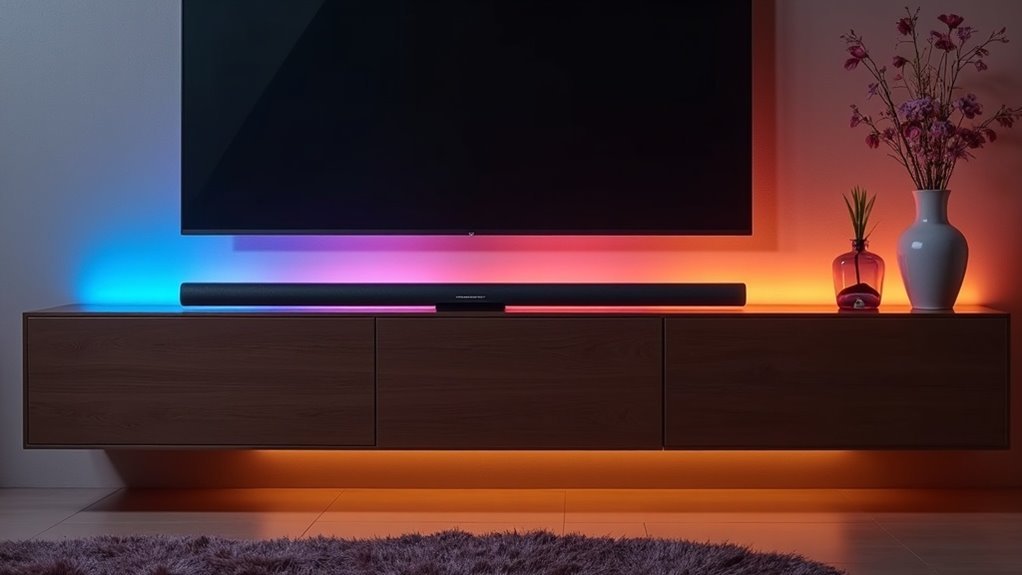
Soundbars first came on the market with the TeleSound Model 1300 in 1980, marking a significant milestone in home audio technology. In 1998, Altec Lansing further advanced the genre by introducing the ADA106, the first multichannel soundbar equipped with Dolby Pro-Logic. Over the years, soundbar technology has evolved tremendously, leading to modern models that offer immersive surround sound and wireless capabilities. Understanding this evolution is essential for appreciating the role of soundbars in contemporary audio setups, and you may find the latest innovations particularly captivating.
Key Takeaways
- The first modern soundbar, TeleSound Model 1300, was introduced in 1980, marking the beginning of soundbar technology.
- Altec Lansing launched the ADA106 in 1998, the first multichannel soundbar featuring Dolby Pro-Logic.
- Yamaha’s YSP-1, released in the early 2000s, advanced soundbars to true 5.1 channel systems.
- The evolution of soundbars continued with advancements in technology, leading to modern Dolby Atmos soundbars.
- Soundbars have evolved from basic stereo systems to sophisticated multi-channel setups over the decades, enhancing the audio experience for home entertainment enthusiasts.
History of Soundbars
When you look back at the evolution of audio technology, the history of soundbars reveals a fascinating journey from basic stereo systems to sophisticated multi-channel setups.
The TeleSound Model 1300, introduced in 1980, was the first modern soundbar, utilizing two 5-watt loudspeakers to simulate stereo sound.
The TeleSound Model 1300, launched in 1980, pioneered modern soundbars with its innovative stereo simulation using dual 5-watt speakers.
In 1998, Altec Lansing launched the ADA106, marking a significant milestone as the first multichannel soundbar that supported Dolby Pro-Logic.
The early 2000s witnessed brands like Yamaha pushing the boundaries with their YSP-1, advancing into 5.1 channel systems.
Key Innovations in Soundbar Technology
As soundbar technology has advanced, you’ve witnessed a remarkable transformation that enhances your audio experience considerably.
Modern Dolby Atmos soundbars now deliver immersive surround sound, elevating your home theater experience with up to 7.1.4 channel setups.
Innovations like wireless subwoofers not only reduce cable clutter but also offer flexible placement options, making them perfect for any room setup.
Enhanced HDMI standards improve connectivity, supporting high-definition audio formats seamlessly.
Continuous improvements in sound separation and bass quality guarantee that every audio detail is crystal clear.
Automatic optimization features further refine playback, ensuring that your soundbar is an increasingly sophisticated tool for delivering exceptional audio performance tailored to your preferences.
Advantages and Disadvantages of Soundbars
While soundbars provide a sleek and space-saving solution for enhancing your audio experience, they present both advantages and disadvantages that should be taken into account.
- The compact design fits seamlessly beneath flat-screen displays.
- A simple setup process allows for an easy upgrade to your home theater system.
- Generally, soundbars are more affordable compared to traditional multi-speaker setups.
- However, they often have limited sound depth, which can make it challenging to fill larger rooms with sound.
In conclusion, a soundbar can significantly enhance your audio experience, but it’s important to be aware of its limitations.
A soundbar can elevate your audio experience, yet understanding its limitations is crucial for optimal enjoyment.
Carefully consider these factors, especially if you’re seeking a rich, immersive sound in your entertainment space.
Evolution of Soundbar Design
Since the introduction of the first modern soundbar in 1998, the design of these audio devices has evolved considerably to meet consumer demands and technological advancements.
While mainstream soundbars typically maintain an elongated wooden speaker box design, they prioritize audio performance over aesthetic changes.
The shift from CRT to flat-screen TVs has driven the need for compact, easily positionable soundbar solutions.
Although external designs have seen little evolution, significant internal advancements in sound separation and bass quality enhance your TV audio experience.
Additionally, soundbars effectively reduce cable clutter, making them an attractive choice for modern home setups.
Explore the latest innovations in soundbar technology and design to elevate your audio experience.
Major Players in the Soundbar Market
The soundbar market is characterized by several key players, each competing for consumer attention with innovative solutions. Major brands have significantly influenced the industry, ensuring high-quality audio products that deliver immersive surround sound experiences.
Notable contributors include:
- Altec Lansing, known for pioneering the soundbar category with the ADA106 in 1998.
- Yamaha, recognized for their YSP series and advanced true 5.1 channel systems.
- Bose, famous for their Cinemate 1SR, which was launched in 2011 and set new standards for sound quality.
- Technology giants such as Samsung, Sony, and LG, who consistently introduce new models each year to stay ahead in the market.
These companies are dedicated to pushing the boundaries of audio technology, enriching your listening experience, and solidifying soundbars as an essential component of home entertainment systems.
Soundbar Hybrids and Their Functionality
Soundbar hybrids elevate your audio experience by combining traditional soundbars with the advantages of stereo systems.
They often connect wirelessly to subwoofers and rear speakers, delivering immersive surround sound while integrating height effect technologies for richer spatial audio.
This setup not only meets the demands of home theater enthusiasts but also enhances your enjoyment of Dolby Atmos content, making it an excellent choice for anyone looking to upgrade their soundbar setup.
Wireless Speaker Connectivity
As home entertainment continues to evolve, soundbars with wireless speaker connectivity have become a game changer for audiophiles and casual viewers alike.
These systems utilize advanced technology and algorithms to deliver superior audio experiences through wireless streaming.
You’ll enjoy:
- Hassle-free setup with minimal cable clutter
- Enhanced audio immersion with subwoofers and rear speakers
- Dynamic soundscapes driven by proprietary algorithms
- Compatibility with Dolby Atmos for an enchanting experience
Surround Sound Capabilities
While traditional soundbars provide a notable improvement over built-in TV speakers, soundbar hybrids elevate audio performance by incorporating the advantages of stereo systems.
These systems utilize the soundbar as the left, center, and right speakers, while adding wireless subwoofers and rear speakers to create a genuine 5.1 surround sound experience.
This compact solution is perfect for those seeking rich audio without the bulk of larger setups.
With the increasing availability of Dolby Atmos content, manufacturers like Nakamichi employ proprietary algorithms to enhance sound layering, allowing you to enjoy a more immersive audio experience that perfectly meets your entertainment needs.
Height Effect Technologies
Height effect technologies in soundbars significantly enhance your audio experience by merging advanced sound engineering with the classic soundbar design.
These innovative systems provide:
- Immersive height effects that elevate your perception of sound.
- Enhanced surround sound, crafting a three-dimensional audio environment.
- Wireless connectivity for subwoofers and rear speakers, minimizing clutter.
- Support for Dolby Atmos content, amplifying your viewing experience.
Future Trends in Soundbar Development
With the rapid evolution of audio technology, soundbars are set to undergo significant advancements that will reshape the home entertainment landscape.
Expect enhanced audio quality focused on immersive experiences, utilizing surround sound technologies such as Dolby Atmos and DTS:X.
Innovations in wireless connectivity will enable seamless integration with smart home systems, catering to modern consumer needs.
Compact designs will maximize audio performance while minimizing space requirements.
Furthermore, the incorporation of advanced materials will enhance sound separation and bass quality, resulting in a more cinematic experience.
Smart features, including voice control and personalization algorithms, will further optimize your listening experience with soundbars.