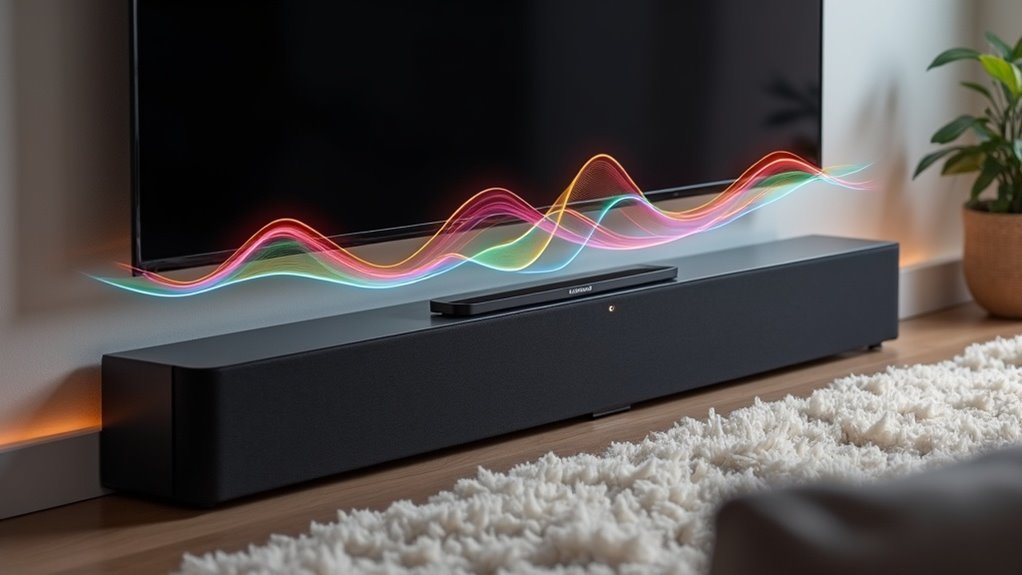
Soundbar channel-based audio refers to speaker configurations within a soundbar that work together to create an immersive sound experience. Channels can vary, such as 2.1 or 5.1 setups, each designed to handle different audio frequencies and enhance clarity and depth. The second number indicates the number of subwoofers for bass, while the third number often signifies height channels for three-dimensional effects. Understanding these configurations can significantly enhance your audio experience with soundbars, and there’s much more to explore about the latest advancements in soundbar technology.
Key Takeaways
- Soundbar channel-based audio refers to the distinct speaker elements that produce sound in various directions, creating an immersive audio experience tailored for home entertainment systems.
- Common soundbar configurations include 2-channel, 2.1-channel, 5.1, and advanced setups like 9.1.4, all designed to enhance surround sound for an enriched listening experience.
- In these configurations, the second number indicates the number of subwoofers, which significantly enhances bass performance and overall audio depth.
- Height channels found in setups such as 5.1.2 or 7.1.4 deliver overhead sound effects, elevating immersion when using formats like Dolby Atmos, perfect for cinematic experiences at home.
- The ideal channel setup depends on the size of the room and the type of content being played, as larger spaces often benefit from more complex configurations to achieve optimal sound quality.
Understanding Soundbar Channels
When you explore soundbar channels, it’s essential to understand that a “channel” represents the distinct speaker elements designed to produce sound in various directions.
The number of channels directly impacts the effectiveness of channel-based audio. For instance, a 2.0 configuration offers basic stereo, while a 5.1 setup enhances immersive sound by adding surround capabilities.
Advanced configurations, like 9.1.4, create a three-dimensional audio experience, ideal for formats like Dolby Atmos.
As you consider your soundbar options, remember that increased channel counts lead to richer, more directional audio, greatly enhancing your listening experience, particularly during movies and gaming sessions.
Common Channel Configurations
Understanding common channel configurations is essential for selecting the right soundbar to meet your audio needs. Different setups can greatly impact your sound experience and immersion. Below is a summary of popular channel configurations specifically for soundbars:
| Channel Configuration | Description | Ideal Use |
|---|---|---|
| 2-channel | Left and right speakers for basic stereo sound | Casual listening in small spaces |
| 2.1-channel | Adds a subwoofer for deeper bass | Enhanced audio fullness |
| 3-channel | Includes a center speaker for clearer dialogue | Movie watching |
| 5-channel | True surround sound for immersive audio experience | Home theater setups |
| 9.1.2 | Height speakers for Dolby Atmos effects | Cinema enthusiasts seeking immersion |
Choosing the right channel configuration is key to elevating your audio experience with a soundbar.
The Importance of the Second Number
The second number in a soundbar’s channel configuration plays a crucial role in shaping the audio experience, especially in terms of low-frequency reproduction. This number indicates the presence and quantity of subwoofers; for instance, a value of 1 signifies the inclusion of one subwoofer.
Subwoofers are vital for generating deep bass frequencies, which enhance the audio’s depth and richness. Generally, a higher second number leads to more powerful low-frequency performance, essential for delivering impactful sound effects in movies and music.
Soundbars equipped with subwoofers significantly improve audio quality, particularly for bass-heavy genres, and their setup is typically straightforward, seamlessly elevating your audio experience.
The Significance of the Third Number
The third number in a soundbar’s channel configuration is crucial as it signifies the inclusion of height channels that deliver overhead sound effects.
These channels significantly enhance audio immersion, elevating your listening experience, particularly with formats like Dolby Atmos and DTS:X.
Height Effects Explained
When exploring soundbar channel configurations, the third number is crucial for delivering height effects that elevate your audio experience. This number represents the up-firing channels, which create the illusion of sound coming from above, a key feature for formats such as Dolby Atmos and DTS:X. The outcome? An immersive auditory experience that surrounds you with sound.
| Up-Firing Channels | Height Effects | Audio Experience |
|---|---|---|
| 0 | None | Basic |
| 1 | Limited | Slightly elevated |
| 2 | Enhanced | More realistic |
| 4 | Superior | Cinematic depth |
| 8 | Immersive | Enveloping sound |
Enhanced Audio Immersion
While many soundbar features contribute to audio quality, the significance of the third number in channel configurations stands out, particularly for those seeking enhanced audio immersion.
This third digit indicates the number of up-firing channels, which are essential for producing height effects in sound. By integrating height speakers, soundbars can simulate audio emanating from above, creating a more immersive experience.
Configurations like 5.1.2 or 7.1.4 elevate realism, especially for Dolby Atmos and DTS:X content. The inclusion of height channels not only fosters virtual surround sound but also broadens the soundstage, making your listening experience across various media types more dynamic and engaging.
For soundbar enthusiasts, understanding these configurations is key to achieving the ultimate audio experience.
Importance in Configurations
Understanding the significance of the third number in soundbar configurations can greatly enhance your audio experience. This number indicates the presence of up-firing channels, which are essential for simulating height effects in audio. Configurations like 5.1.2 or 7.1.4 incorporate these channels, enriching your surround sound with audio perceived from above.
| Configuration | Height Speakers |
|---|---|
| 5.1.0 | 0 |
| 5.1.2 | 2 |
| 7.1.4 | 4 |
A higher third number correlates with advanced audio formats, making your listening experience more immersive and realistic, especially when paired with a subwoofer. Understanding these configurations can help you choose the right soundbar for your home theater setup.
Choosing the Right Channel Setup
Choosing the right channel setup for your soundbar is essential, as it directly impacts your audio experience based on various factors.
Consider your room size; smaller spaces often benefit from 2.1 or 3.1 configurations, while larger areas can accommodate 5.1 or 7.1 setups for ideal surround sound.
Smaller rooms thrive with 2.1 or 3.1 setups, while larger spaces benefit from 5.1 or 7.1 for optimal surround sound.
The type of content matters too; movie lovers should opt for 5.1.2 or higher for Dolby Atmos, whereas casual listeners might find 2.1 sufficient.
If you’re a gamer, prioritize 5.1 or 7.1 for precise directional audio.
Additionally, consider future-proofing with expandable options to enhance your soundbar’s audio quality over time.
Enhancing Your Home Theater Experience
To truly elevate your home theater experience with soundbars, it’s crucial to focus on both audio and visual elements in harmony.
Incorporating height speakers in your soundbar setup enhances Spatial Audio, immersing you in a three-dimensional soundscape. For peak performance, consider configurations like 5.1.2 or higher, which deliver sound from various angles, including above. This is particularly effective for action movies or gaming, where realism is key.
Additionally, balance your room size with the soundbar’s capabilities; smaller spaces may benefit from simpler setups.
Future Trends in Soundbar Technology
As you explore the future of soundbar technology, you’ll encounter enhanced immersive experiences with formats like Dolby Atmos, elevating audio realism through object-based sound.
The integration with smart devices will streamline your audio setup, allowing for intuitive control and connectivity.
These advancements in soundbars point to a more personalized and engaging listening experience tailored to your preferences and environment.
Enhanced Immersive Experiences
As the landscape of soundbar technology evolves, these devices are leading the charge in delivering enhanced immersive audio experiences through advanced configurations.
Future trends indicate a significant movement towards immersive audio formats such as Dolby Atmos and DTS:X, which utilize multiple channels and dedicated height speakers. These up-firing channels create a three-dimensional soundscape, making audio feel as though it’s emanating from above you.
Object-based audio technology further enriches this experience by allowing for dynamic sound placement that can be tailored to your specific environment.
Additionally, features like room calibration and adaptive sound technology optimize audio output, ensuring a personalized and rich auditory experience that transforms your listening space with soundbars.
Integration With Smart Devices
With the rapid advancement of soundbar technology, integration with smart devices is becoming a pivotal trend that enhances user experience and convenience.
Today’s soundbars feature Wi-Fi and Bluetooth, allowing easy pairing with smartphones and tablets. Users can control audio settings and streaming services effortlessly using voice commands through integrated assistants like Amazon Alexa and Google Assistant.
This compatibility extends to smart home platforms such as Apple HomeKit and Google Home, creating a cohesive entertainment ecosystem.
Future soundbar models promise to support advanced audio formats, ensuring superior sound quality while maintaining seamless connectivity with your favorite smart devices.