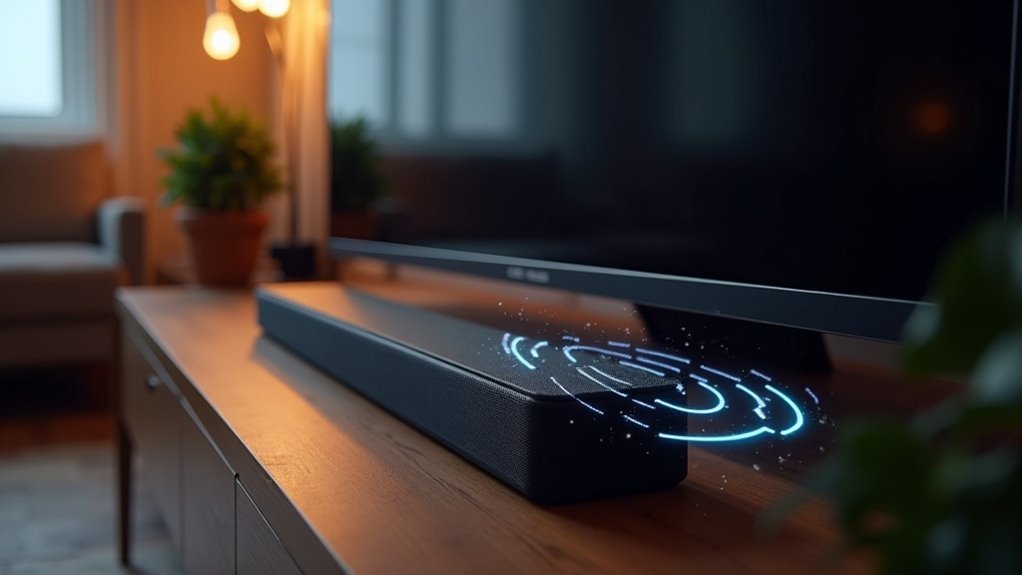
Soundbar wireless protocol latency refers to the delay between the transmission of the audio signal and its playback, which can significantly affect your audio experience. Various factors influence latency levels, including the type of connection, frequency band, and the use of advanced audio codecs. For example, Bluetooth connections often result in higher latency compared to Wi-Fi, while codecs such as aptX low latency can reduce delays to approximately 40 milliseconds. Understanding these factors is crucial for ensuring proper synchronization between audio and video, ultimately enhancing your listening experience with your soundbar. Explore more tips on optimizing your soundbar setup for the best performance.
Key Takeaways
- Soundbar wireless protocol latency refers to the delay between audio transmission and sound output, which can affect the synchronization with video content.
- Latency can vary significantly based on the connection type, with Bluetooth typically exhibiting higher latency compared to Wi-Fi connections.
- Utilizing advanced audio codecs, such as aptX low latency, can help reduce Bluetooth delays to around 40 milliseconds, improving audio synchronization for a better viewing experience.
- Operating frequency bands, particularly the 2.4 GHz band, can introduce interference that impacts both latency and audio quality in soundbars.
- To minimize latency and enhance overall audio performance, it is beneficial to choose soundbars that utilize System on Chip solutions along with Wi-Fi connections.
Understanding Soundbar Latency
Understanding soundbar latency is essential for enhancing your audio-visual experience, especially when watching movies or playing games.
Latency refers to the delay between audio data transmission and sound production, which can disrupt synchronization and lead to a less immersive experience. Advanced codecs like aptX low latency reduce this delay to about 40 milliseconds, improving the timing of sound delivery.
Additionally, System on Chip (SoC) solutions can achieve even lower latency, around 24 milliseconds, by integrating audio processing functions directly into the soundbar.
Wireless protocols operating in the 2.4 GHz band maintain stable connections, while Wi-Fi standards like WEA support uncompressed audio, ensuring that multi-channel formats like Dolby Atmos remain synchronized across all speakers for a seamless sound experience.
Factors Influencing Latency
When evaluating soundbar latency, several key factors come into play that can greatly impact your audio experience.
The type of connection is paramount; Bluetooth generally incurs higher latency than Wi-Fi due to its transmission characteristics. Advanced audio codecs like aptX low latency can reduce delays to around 40 milliseconds, while standard Bluetooth may reach up to 120 milliseconds.
The operating frequency band also affects latency, with the 2.4 GHz band facing interference risks that can further impact performance.
Additionally, built-in System on Chip (SoC) solutions can minimize latency to as low as 24 milliseconds, and Wi-Fi standards like WEA enhance synchronization across multiple speakers, further reducing delays for a more seamless audio experience.
The Role of Wireless Protocols
Wireless protocols are vital for ensuring efficient audio signal transmission in soundbars, directly impacting latency.
Stability and connection reliability are essential for maintaining synchronization between audio and video playback in soundbars.
Audio Signal Transmission Efficiency
Efficient audio signal transmission in soundbars hinges on the choice of wireless protocols, as they directly influence latency and sound quality.
Soundbars typically operate in the 2.4 GHz band, balancing efficient signal transmission with low latency. Advanced protocols, like aptX low latency, can trim Bluetooth audio delay to about 40 milliseconds, enhancing synchronization.
Wi-Fi standards, such as WEA, support uncompressed multi-channel audio, which is essential for high-quality sound across soundbar systems. Furthermore, integrated System on Chip (SoC) solutions can achieve latencies as low as 24 milliseconds, optimizing transmission time.
Consequently, selecting the right protocols is critical for delivering an immersive audio experience through soundbars without disruptions.
Stability and Connection Reliability
Choosing the right wireless protocol is essential for soundbars to maintain stability and connection reliability during audio playback.
These devices primarily leverage specialized protocols operating in the 2.4 GHz frequency band, minimizing delays and interruptions for synchronized audio and video. While traditional Bluetooth connections can introduce latency, Wi-Fi networks enhance stability, markedly reducing audio lag.
The integration of System on Chip (SoC) solutions facilitates faster audio transmission, achieving latency as low as 24 milliseconds. Additionally, advanced codecs like aptX low latency further minimize Bluetooth delays to around 40 milliseconds, ensuring a seamless and high-quality listening experience for soundbar users.
System on Chip (SoC) Solutions Explained
System on Chip (SoC) solutions in soundbars streamline audio processing by integrating essential functions like Bluetooth connectivity and audio decoding into a single unit.
This integration greatly reduces latency, often achieving levels as low as 24 milliseconds, which is crucial for maintaining audio-visual synchronization while watching movies or playing games.
With these advancements in soundbar technology, you can expect clearer sound and improved dialogue delivery, significantly enhancing your overall entertainment experience.
Integrated Audio Processing
While exploring integrated audio processing in modern soundbars, you’ll discover that System on Chip (SoC) solutions play a crucial role in enhancing audio performance.
These specialized chips integrate Bluetooth, Wi-Fi, audio decoding, and output functions, streamlining the audio processing workflow specifically for soundbars. With latency as low as 24 milliseconds, SoCs ensure that audio-video synchronization remains seamless.
Furthermore, the incorporation of advanced audio processing capabilities supports high-quality formats such as Dolby Atmos, elevating the listening experience. By consolidating various components, SoC technology enhances efficiency and reduces power consumption, which is particularly beneficial for portable soundbar models.
This seamless integration ultimately provides users with a superior audio experience tailored for their soundbar needs.
Latency Reduction Techniques
To achieve ideal audio performance in soundbars, various latency reduction techniques are employed, primarily leveraging the capabilities of System on Chip (SoC) solutions.
These integrated systems combine Bluetooth, Wi-Fi, audio decoding, and output functions into a single chip, significantly reducing audio transmission time. With latency as low as 24 milliseconds, SoC solutions ensure that audio syncs perfectly with video, greatly enhancing your viewing experience.
By minimizing components and connections, SoC designs improve transmission efficiency, reducing disruptive delays. Advanced audio codecs within these solutions further optimize latency management, which is essential for immersive gaming and film experiences.
Thus, SoC technology plays a crucial role in delivering low-latency audio performance in soundbars.
Advanced Audio Codecs and Their Impact
Advanced audio codecs play an essential role in enhancing soundbar performance, particularly in reducing latency.
Codecs like aptX low latency, AAC, and LC3 compress audio data for faster transmission, significantly minimizing delays. For example, aptX low latency can reduce Bluetooth audio delay to around 40 milliseconds, which is crucial for syncing audio with video.
In contrast, standard Bluetooth can experience lags of up to 120 milliseconds. By incorporating these advanced codecs, soundbars achieve lower latency, enhancing dialogue clarity and sound effects during movies and gaming.
This integration ensures high-quality audio delivery while keeping sound synchronized with the corresponding visuals, ultimately enriching your overall soundbar experience.
Wi-Fi Based Standards for Audio Transmission
As you explore the evolution of soundbars, Wi-Fi based standards like Wireless Ethernet Audio (WEA) stand out for their ability to deliver uncompressed multi-channel audio. This capability enhances sound quality and clarity considerably, supporting advanced formats like Dolby Atmos for a more immersive experience.
Wi-Fi connections also maintain sync across multiple speakers, which is essential for cohesive surround sound setups that soundbars strive to achieve. By reducing latency issues often found in Bluetooth, Wi-Fi facilitates a synchronized audio-visual experience, crucial for home theater systems.
Additionally, the ability to wirelessly connect subwoofers and surround speakers using these standards amplifies the flexibility and performance of soundbar systems, making them highly effective for a superior audio experience.
Importance of Low Latency in Different Scenarios
While Wi-Fi based standards significantly enhance audio quality in soundbars, achieving low latency is equally crucial for an optimal listening experience.
In scenarios like fast-paced movies or gaming, even a minor delay can disrupt synchronization between sound and video, leading to a loss of immersion. Real-time audio cues are particularly vital in gaming, where low latency can directly impact your gameplay performance.
Additionally, clear dialogue that aligns with lip movements is essential for enhancing realism and enjoyment. Advanced codecs like aptX low latency help reduce Bluetooth delays to around 40 milliseconds, ensuring seamless audio across soundbars and subwoofers, especially in setups supporting formats like Dolby Atmos.
Tips for Reducing Latency in Your Setup
To achieve ideal audio synchronization in your soundbar setup, it’s essential to take into account several factors that can significantly reduce latency.
Achieving perfect audio synchronization in your soundbar setup requires careful consideration of factors that minimize latency.
Consider the following tips:
- Use soundbars with built-in System on Chip (SoC) solutions for lower latency.
- Choose soundbars that support advanced audio codecs like aptX low latency.
- Prefer Wi-Fi connections over Bluetooth for uncompressed audio transmission.
- Keep your soundbar and audio sources updated with the latest firmware.
- Position your soundbar away from obstacles and electronic devices to minimize interference.
Implementing these strategies will help guarantee your audio and video stay in perfect sync, enhancing your overall soundbar experience.