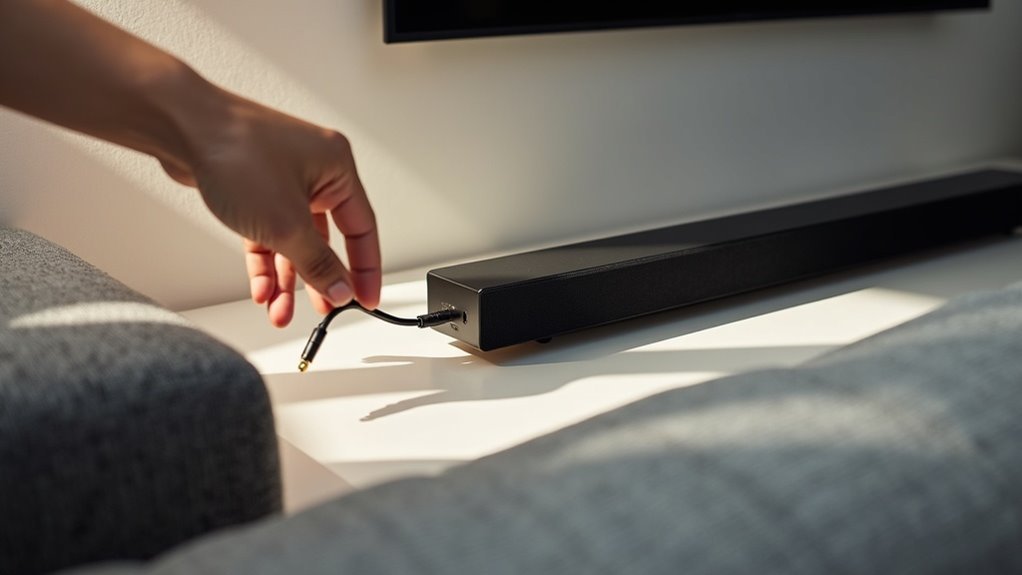
TOSLINK optical connections in soundbars come with several limitations that users should be aware of. These connections primarily transmit only two channels of PCM audio and are capped at a maximum resolution of 24-bit/96kHz, which restricts the ability to enjoy high-end audio formats such as Dolby Atmos. Furthermore, bandwidth constraints can lead to drops in sound quality, especially in more complex audio setups. It’s also important to note that TOSLINK cables are somewhat fragile and have an effective length of around 5 meters, which can pose a risk for signal degradation over longer distances. By delving deeper into these limitations, you can gain valuable insights and explore potential solutions for enhancing your soundbar experience.
Key Takeaways
- TOSLINK primarily supports only two channels of PCM audio, which can limit the immersive sound experiences that many soundbars aim to provide.
- The maximum resolution of 24-bit/96kHz may restrict the high-quality audio playback that users expect from premium soundbars.
- A notable drawback is that many modern soundbars and TVs do not come equipped with TOSLINK ports, which complicates connectivity options for users.
- Additionally, signal degradation can occur beyond 5 meters, which limits the effective cable length for achieving optimal audio quality in soundbar setups.
- Using adapters for TOSLINK connections may lead to audio quality loss and compatibility issues, further complicating the user experience with soundbars.
Understanding TOSLINK Optical Connections
TOSLINK optical connections are a popular choice for soundbars, providing a reliable method for transmitting digital audio signals using light pulses. This technology minimizes electromagnetic interference, ensuring high audio quality even over longer distances, which is essential for an immersive soundbar experience.
While TOSLINK supports multichannel audio configurations, it primarily transmits two channels of PCM audio, which can limit its effectiveness in delivering full surround sound for some soundbar systems.
Typically, optical cables are made from plastic fibers, which may affect signal clarity compared to glass alternatives. Furthermore, the fragility of TOSLINK cables makes them prone to damage, and any bending can lead to signal degradation, ultimately impacting the performance of your soundbar across various audio formats.
Limitations of Audio Formats Supported
While TOSLINK optical connections provide a reliable means of transmitting audio to soundbars, they’ve notable limitations in supporting advanced audio formats.
TOSLINK primarily handles two channels of PCM audio, which can restrict the immersive experience offered by modern sound systems. It can’t transmit high-end formats like Dolby Atmos or DTS-HD Master Audio due to bandwidth constraints, and is limited to a maximum resolution of 24-bit/96kHz.
This limitation might leave audiophiles and soundbar enthusiasts wanting more. Additionally, TOSLINK doesn’t support lossless audio formats, requiring data compression that can detract from the full surround sound experience, especially compared to HDMI connections that deliver superior audio capabilities.
Bandwidth Constraints and Sound Quality
When using TOSLINK optical cables with soundbars, you’re limited to a maximum of 24-bit/96kHz audio, which restricts your access to high-resolution audio formats.
This limitation also means you can only transmit two channels of PCM audio, hindering your surround sound experience.
Consequently, many complex audio formats may not perform at their best, leading to a noticeable drop in sound quality when using your soundbar.
Limited Audio Formats
While TOSLINK optical cables provide a dependable method for audio transmission, their limitations in audio formats can impact the performance of soundbars.
Specifically, TOSLINK can only transmit up to 2 channels of PCM audio, which restricts support for advanced multi-channel audio formats like Dolby Atmos and DTS:X that many modern soundbars are designed to utilize. The maximum resolution is typically capped at 24-bit/96kHz, which may not suffice for high-definition lossless audio formats, resulting in a sound experience that falls short compared to HDMI connections.
Additionally, optical connections may introduce audio synchronization issues in setups that require higher bandwidth, further hindering the ability of soundbars to deliver a comprehensive and immersive audio experience.
Channel Restrictions
TOSLINK connections can present limitations for soundbar systems, as they were designed with bandwidth constraints that often hinder the delivery of the sound quality expected from modern audio devices.
These optical cables typically transmit only up to 2 channels of PCM audio, which restricts compatibility with advanced multi-channel audio formats like Dolby Atmos and DTS:X that many soundbars support.
With a maximum bandwidth of 24-bit/96kHz, TOSLINK may not adequately handle high-resolution audio formats that require higher data throughput.
Furthermore, signal degradation can occur over distances greater than 5 meters, affecting audio clarity.
Additionally, users may need to manage separate connections for video signals, complicating setups that aim to achieve both audio and visual excellence with their soundbars.
Video Transmission Limitations
TOSLINK optical cables present significant limitations for soundbar integration, as they’re designed solely for audio signals.
Unlike HDMI, TOSLINK can’t convey video data, restricting you to audio-only setups. This limitation complicates your home theater experience with a soundbar, as you’ll need to manage multiple connections to transmit video alongside audio.
- TOSLINK doesn’t support modern audio enhancements that may accompany 4K or HDR video.
- You’ll often require additional adapters or converters for comprehensive soundbar functionality.
- The lack of video support increases the complexity of your audio system configuration.
Cable Length and Signal Degradation
When connecting soundbars using TOSLINK optical cables, it’s important to note that the effective maximum length is approximately 5 meters (16 feet) before signal degradation may occur.
Beyond this distance, the limitations of plastic optical fibers and physical stress on the cable can lead to audio distortion and dropouts, which can negatively impact your soundbar experience.
To ensure consistent audio quality, especially for longer distances, consider using fiber optic extenders or boosters tailored for soundbar setups.
Maximum Cable Length
Optical cables typically maintain ideal sound quality and signal integrity up to a maximum length of about 5 meters (16 feet) when connecting soundbars.
Beyond this distance, you risk significant signal degradation, which can lead to audio dropouts.
The type of fibers in your Toslink cables affects this effective length:
- Plastic fibers have a limited range compared to glass fibers, which might impact your soundbar experience.
- Sharp bends or twists in the cable can further impair audio performance, causing interruptions or quality loss in sound output.
For distances exceeding the maximum cable length, consider using optical extenders or boosters to preserve audio quality and prevent degradation for your soundbar system.
Signal Loss Factors
Although you mightn’t realize it, several factors contribute to signal loss in TOSLINK cables, particularly when connecting soundbars. The maximum effective range for these optical cables is around 5 meters; beyond this distance, signal degradation can occur, impacting audio quality.
Bends or twists in the cable can also threaten its fragile design, leading to further signal loss, which is crucial for optimal soundbar performance. While TOSLINK cables are immune to electromagnetic interference, their bandwidth limitations make them unsuitable for high-definition audio often desired in modern sound systems.
To maintain sound performance over longer distances when using a soundbar, consider using optical extenders or repeaters to counteract these inherent limitations and preserve your audio experience.
Fragility and Handling Concerns
Because TOSLINK optical cables are often used with soundbars, it’s essential to handle them with care to prevent damage. Their fragile construction can lead to issues that may affect audio quality.
To ensure longevity and optimal performance, consider the following:
- Avoid bending or twisting the cable beyond the manufacturer’s recommended radius, especially when connecting to your soundbar.
- Store cables properly using cable organizers, and keep them protected from moisture or dust to maintain sound clarity.
- Implement installation precautions to prevent crushing or stepping on the cable, ensuring a secure connection for your sound system.
Compatibility With Modern Devices
With the rise of newer audio technologies, soundbars equipped with TOSLINK optical connections may face compatibility issues when paired with modern devices.
Many contemporary soundbars and TVs prioritize HDMI ARC for audio transmission, limiting TOSLINK’s usability. While TOSLINK supports basic audio formats like Dolby Digital, it can’t transmit advanced formats such as Dolby Atmos or DTS:X, which are essential for immersive surround sound experiences.
Additionally, TOSLINK’s limitations in handling multi-channel audio, typically restricted to 2 channels of PCM, can hinder the overall sound quality.
As some modern soundbars and TVs lack TOSLINK ports entirely, you might need adapters to achieve proper audio compatibility.