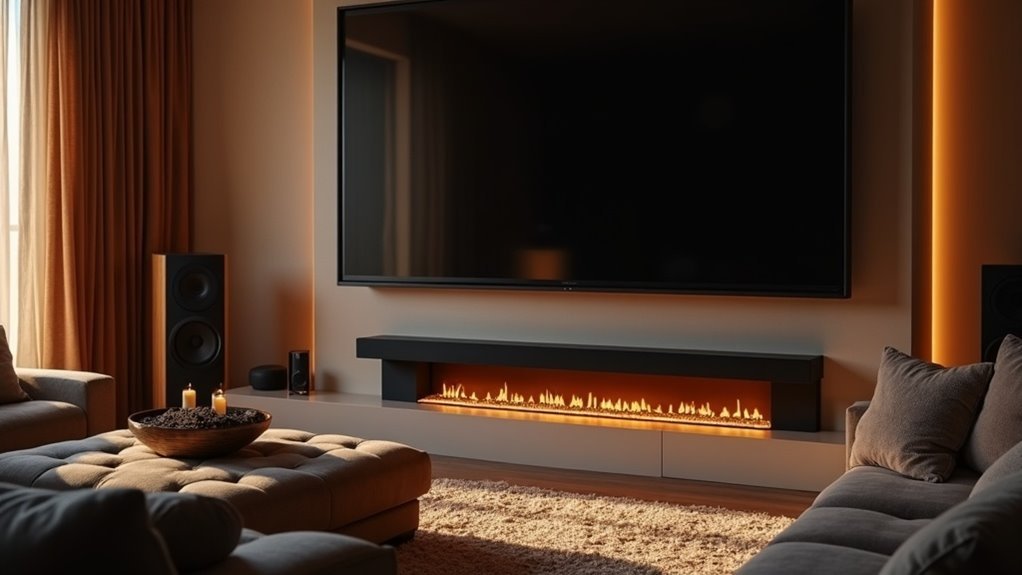
5.1 soundbars provide an immersive audio experience, but they aren’t true surround systems. They rely on simulated surround sound through advanced audio processing rather than dedicated rear speakers. This setup enhances dialogue clarity and enriches the sound environment, yet lacks the detailed immersion of traditional surround systems. Soundbars work well for many setups, but knowing their limitations helps in making an informed choice. There’s much more to explore about optimizing your experience with soundbars, including tips on placement, connectivity options, and how to choose the right model for your needs.
Key Takeaways
- 5.1 soundbars simulate surround sound using advanced audio processing but do not include physical rear speakers, meaning they cannot provide a true surround experience.
- They offer immersive audio through multiple channels, enhancing the clarity of dialogue and overall sound quality for your entertainment.
- The central speaker improves dialogue clarity, while the surround sound effect is created by the soundbar’s configuration.
- Built-in subwoofers in soundbars may not perform as well as standalone options, which can impact the reproduction of low-frequency sounds.
- While 5.1 soundbars provide a convenient audio solution, true surround sound systems with discrete speakers deliver a superior level of immersion.
Understanding 5.1 Soundbar Technology
When exploring soundbar technology, particularly the 5.1 systems, you’ll discover that they integrate five distinct audio channels along with a dedicated subwoofer, resulting in a rich and immersive sound experience.
This surround sound setup enhances your audio environment, ensuring clarity in dialogue through the central speaker while enveloping you in spatial audio.
Advanced audio processing technologies simulate multi-speaker configurations, making these soundbars ideal for larger rooms where sound needs to fill the space effectively.
Additionally, many 5.1 soundbars feature wireless connectivity, simplifying integration with various devices and minimizing cable clutter, ultimately providing an enhanced audio experience that caters to your entertainment needs.
The Components of a 5.1 Soundbar
A 5.1 soundbar comprises six essential components: two front speakers (left and right), a center speaker, two surround speakers (left and right), and a subwoofer.
These speakers work in harmony to deliver a rich surround sound experience, significantly enhancing audio quality for your entertainment. The center speaker is crucial for dialogue clarity, ensuring you catch every word in movies and shows.
Experience rich surround sound that enhances audio quality, with a center speaker ensuring crystal-clear dialogue in every scene.
The surround speakers contribute to an immersive experience by simulating audio directionality, making it feel as though sound is coming from various angles. Meanwhile, the subwoofer enriches low frequencies, adding depth and impact to your audio.
With minimal wiring required, setup is straightforward and convenient, allowing you to enjoy powerful sound without the hassle of clutter.
How 5.1 Soundbars Simulate Surround Sound
When you explore how 5.1 soundbars simulate surround sound, consider their speaker configurations and audio channel processing techniques.
These soundbars cleverly position audio channels to create an immersive experience, often enhanced by advanced technologies designed specifically for soundbars.
Additionally, remember that the placement of the soundbar within your room can greatly affect the overall sound quality and surround effect, making it crucial to find the optimal position for the best audio experience.
Speaker Configuration Explained
Although many soundbars claim to deliver immersive audio experiences, understanding the speaker configuration of a 5.1 soundbar reveals how it simulates surround sound effectively. This setup includes five channels: front left, front right, central channel, surround left, and surround right, plus a subwoofer.
The central channel enhances dialogue clarity, ensuring conversations stand out against background sounds. While these soundbars utilize advanced technology to manipulate audio signals and create a surround sound experience, they often don’t match the depth of traditional multi-speaker systems.
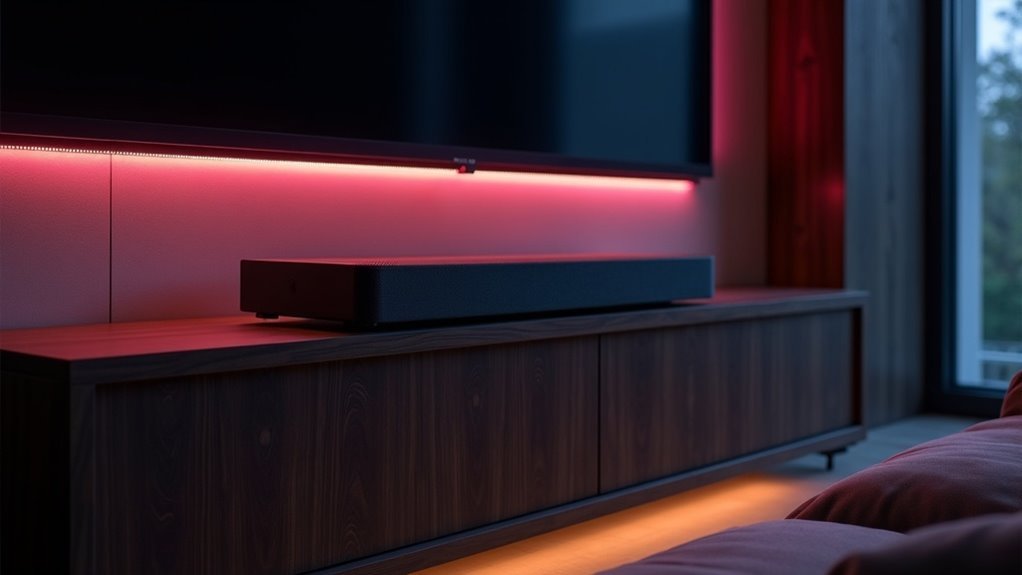
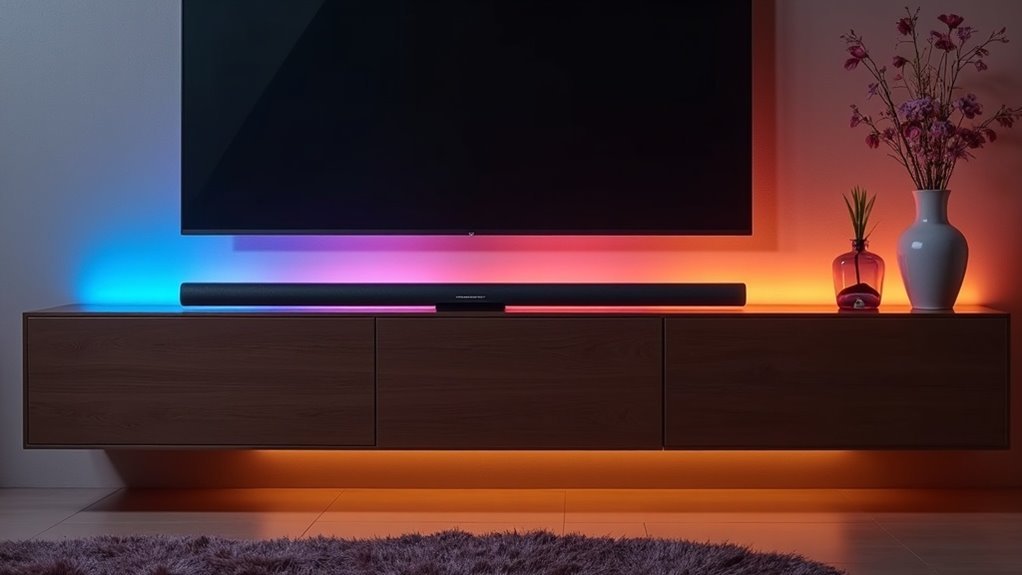
Proper placement, ideally centered above or below the screen, maximizes their ability to deliver a convincing surround sound effect, making them a popular choice for home entertainment setups.
Audio Channel Processing
Understanding how 5.1 soundbars process audio channels is key to appreciating their ability to simulate surround sound. These soundbars utilize multiple speakers and advanced audio processing technologies like Dolby Digital and DTS to create immersive audio experiences. The channel configuration, speaker quality, and audio source encoding are essential for delivering a convincing soundscape. A subwoofer enhances low-frequency effects, adding depth to the overall sound. Many models also feature upward-firing speakers or virtual surround sound technologies to enrich the spatial audio experience.
| Component | Function |
|---|---|
| Left/Right Drivers | Deliver stereo effects |
| Center Driver | Provides dialogue clarity |
| Surround Drivers | Creates an immersive audio experience |
| Subwoofer | Enhances low-frequency sounds |
Placement Impact on Experience
To fully appreciate the immersive experience of a 5.1 soundbar, it’s essential to consider how placement impacts audio perception. Properly positioning the soundbar, ideally aligned with your TV, ensures optimal surround sound simulation.
The subwoofer can be placed flexibly to enhance bass without interfering with other audio channels. Advanced audio processing in the surround channels mimics rear speakers, creating the illusion of sound coming from behind the listener.
To fully experience the dynamic sound landscape and enjoy the enhanced overall experience, maintain your position within the soundbar’s ideal listening zone, typically a few feet in front.
Comparing 5.1 Soundbars to Traditional Surround Systems
When comparing 5.1 soundbars to traditional surround systems, sound quality and installation ease are key factors to evaluate.
Soundbars offer a compact solution that’s straightforward to set up, making them an attractive option for those who prefer simplicity.
While they may not match the audio fidelity of a full surround system with dedicated speakers, many modern soundbars are designed to deliver impressive sound quality that enhances your viewing experience.
Understanding these differences can help you choose the right soundbar to meet your audio needs.
Sound Quality Comparison
Comparing 5.1 soundbars to traditional surround systems reveals notable differences in sound quality and immersive experience.
- Spatial Accuracy: While traditional systems provide superior sound positioning with discrete speakers, 5.1 soundbars utilize advanced technology to create a more immersive experience within a compact design.
- Dialogue Clarity: Soundbars are engineered to enhance dialogue clarity, making them a great choice for movie enthusiasts, even though they may not match the depth of dedicated setups.
- Customization: Many modern soundbars offer features like customizable EQ settings and virtual surround sound options, providing a level of flexibility that can enhance your audio experience.
- Room Acoustics: Soundbars are designed to perform well in various room environments, leveraging built-in technology to adapt to different acoustics more effectively than traditional systems.
Ultimately, while 5.1 soundbars significantly improve your audio experience and offer convenience, they present a compelling alternative to traditional surround sound setups without the complexity of multiple speakers.
Setup and Installation Ease
Setting up a traditional surround sound system can often be a daunting task, but 5.1 soundbars provide a streamlined solution that simplifies the installation process.
With fewer components and minimal wiring, the setup becomes significantly easier. Many soundbars can connect to wireless rear speakers, removing the need for cumbersome cables that can clutter your space.
In comparison, traditional systems necessitate precise speaker placement and intricate wiring, often requiring advanced technical knowledge. The plug-and-play nature of 5.1 soundbars allows for quick and accessible installation, making them an appealing choice for users who prioritize convenience and minimal disruption while still enjoying a high-quality surround sound experience.
Benefits of Using a 5.1 Soundbar
Using a 5.1 soundbar significantly elevates your audio experience, particularly during movie watching or gaming sessions.
Here are some essential benefits:
- Immersive Sound: Enjoy surround sound with dedicated right, left, center, and two surround speakers, which create a rich audio environment.
- Dialogue Clarity: The center channel ensures that conversations are crisp and clear, making it easier to follow the storyline.
- Room Coverage: Engineered to effectively fill larger spaces, a 5.1 soundbar offers a balanced audio experience throughout the room.
- Advanced Technology: Featuring innovations like Dolby Atmos, a 5.1 soundbar delivers a cinematic experience that simulates three-dimensional sound, enhancing your overall enjoyment.
Limitations of 5.1 Soundbars
While 5.1 soundbars offer many advantages, they come with notable limitations that can affect your listening experience.
These soundbars simulate surround sound through virtual processing, which means they lack the physical rear speakers that are essential for true immersion. The placement of the soundbar also impacts its ability to convey audio from behind or above you, which can diminish the overall effect.
Furthermore, built-in subwoofers in these soundbars often underperform compared to standalone options, leading to limitations in low-frequency reproduction.
Ultimately, while 5.1 soundbars do enhance TV audio, they can’t match the detailed and immersive experience provided by a full 5.1 surround sound system that includes discrete speakers and optimal placement.
Choosing the Right Soundbar for Your Space
When selecting the right soundbar for your space, it’s important to evaluate several factors that influence audio quality and overall enjoyment.
- Room Size: Larger spaces benefit from 5.1 soundbars, which provide immersive surround sound for an enhanced listening experience.
- Audio Needs: If you’re a movie enthusiast, prioritizing a 5.1 system is essential for achieving a richer cinematic experience.
- Installation Complexities: Take into account the setup time; 5.1 soundbars require careful placement of rear speakers to optimize sound distribution.
- Budget: Remember that 5.1 soundbars are generally more expensive, while 2.1 options can be a great fit for casual viewers who still want good audio quality.
Testing different models in-store is highly recommended to ensure you find the best soundbar that meets your audio expectations and fits perfectly within your space.
Tips for Optimizing Your 5.1 Soundbar Experience
To enhance your 5.1 soundbar experience, proper positioning and setup are essential for achieving optimal audio performance.
| Tip | Description | Benefit |
|---|---|---|
| Central Positioning | Place the soundbar directly beneath your TV. | Optimized audio projection |
| Rear Speakers Placement | Position rear speakers at ear level, angled slightly. | Enhanced immersive surround |
| Cable Connections | Use HDMI ARC or optical cables for superior audio clarity. | Simplified setup and connectivity |
| Regular Firmware Updates | Keep your soundbar’s firmware updated. | Access to improved features |