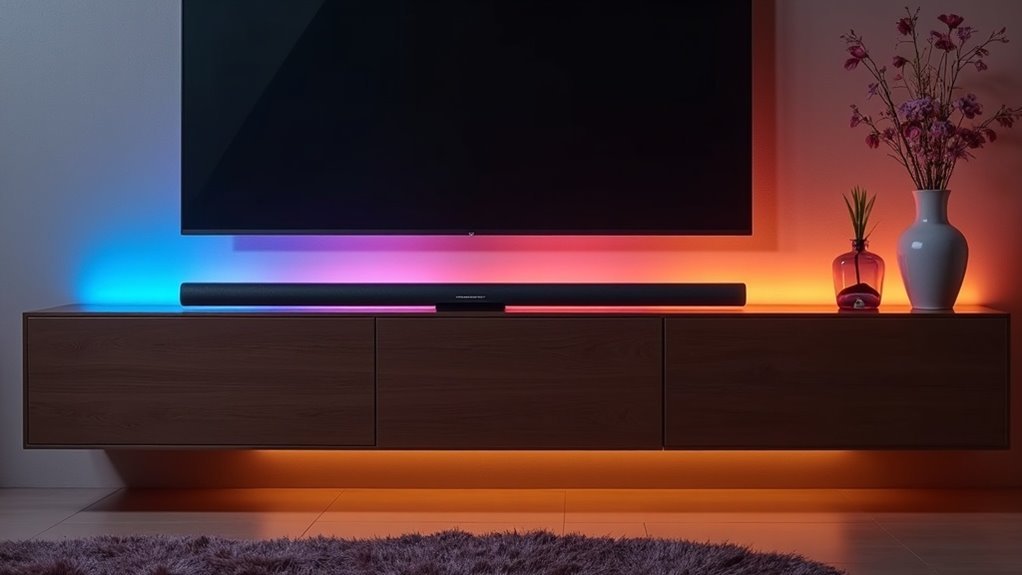
Yes, soundbars are easy to install. You’ll need minimal tools such as a stud finder, drill, and a screwdriver. Simply connect your soundbar to the TV using an HDMI, optical, or AUX cable. Wall mounting is straightforward, enhancing audio projection while minimizing clutter. Most users find the process simple and effective, with clear guides available on our website. If you’re looking to troubleshoot common issues or explore different mounting options, you’ll find plenty of resources here for a successful soundbar setup.
Key Takeaways
- Soundbars generally require only a power cord and a single HDMI cable for installation, which makes the setup process quite simple.
- Many users find that installing a soundbar is straightforward, often managing it on their own with the help of clear guides available on this website.
- Wall-mounting a soundbar can improve sound projection and aesthetics, and the installation can be accomplished using basic tools like a drill and screwdriver.
- The various connectivity options, such as HDMI, optical, and Bluetooth, ensure that soundbars are compatible with a wide range of devices, facilitating an easy setup.
- For troubleshooting common issues, steps like restarting devices and checking audio settings usually resolve connectivity problems quickly, making the experience smooth for users.
Understanding Soundbar Installation
Understanding soundbar installation is essential for maximizing your audio experience. Connecting a soundbar to a TV is straightforward, typically requiring just a power cord and a single HDMI cable.
You can choose from various connection methods, including Bluetooth and optical cables, to ensure compatibility with your equipment. Most soundbars facilitate easy mounting, whether to your TV or on the wall, and often come with the necessary hardware.
By simplifying the installation process, soundbars deliver the best sound quality with surround sound effects without the hassle of multiple speakers, enhancing your home theater experience in just a few minutes.
If you’re looking to elevate your audio setup, exploring soundbars and their installation can significantly improve your viewing experience.
Tools Needed for Installation
To install your soundbar effectively, gather essential tools such as a stud finder, level, and basic hardware like a drill or screwdriver.
Additionally, depending on your setup, you may need optional accessories such as HDMI, optical, or aux cables to ensure seamless connectivity.
Having these tools readily available will guarantee a secure and straightforward installation process for your soundbar.
Essential Tools Required
When you’re ready to install your soundbar, having the right tools on hand makes the process much smoother.
For a wall mount, a screwdriver is essential for securing brackets or wall anchors. A stud finder helps you locate sturdy points for mounting, ensuring safety and stability.
To achieve ideal audio projection, use a level tool to confirm the soundbar is straight. If your soundbar includes a mounting kit, it may come with necessary screws and brackets, reducing extra tool requirements.
Finally, wire cutters or strippers may be needed to adjust cables and connect your soundbar neatly.
Optional Installation Accessories
While the basic tools are essential for soundbar installation, several optional accessories can enhance the process and improve the final setup.
Using a stud finder helps locate wall studs, ensuring your soundbar is securely mounted. Wall-mounting kits often include brackets and screws, but it’s important to confirm compatibility with your specific soundbar model.
If you’re using an HDMI cable, consider cable ties or clips to keep everything organized and tidy. Additionally, having a partner can make positioning the soundbar relative to the TV easier and more efficient.
These installation accessories facilitate a smoother installation experience and contribute to a polished final look for your sound system.
How to Connect Your Soundbar
Connecting your soundbar can significantly improve your audio experience, and there are various methods to do so based on your setup. Here’s how to connect your soundbar:
- Wi-Fi: Download the SmartThings app, switch to Wi-Fi mode, and follow the prompts for a seamless connection.
- HDMI: Ensure both devices are powered off, then connect them. Enable Anynet+ on the soundbar and HDMI-CEC on the TV for compatibility.
- Optical Cable: Connect the OPTICAL OUT port on your TV to the DIGITAL AUDIO IN port on your soundbar, and set the soundbar to D.IN. mode for audio playback.
- AUX: Utilize an AUX cable to link AUX IN on the soundbar to AUDIO OUT on your TV or device.
- Bluetooth: Pair your soundbar with your TV or device by accessing the Bluetooth settings through the remote or the TV menu.
Enjoy your enhanced audio experience with your soundbar!
Mounting Options for Soundbars
Mounting your soundbar can greatly enhance your audio experience while keeping your space organized and visually appealing.
You have several mounting options, including a wall-mounted soundbar or attaching it directly to your TV. Slim designs make installation straightforward, allowing for reduced clutter.
Explore various mounting options for your soundbar, including sleek wall mounts or direct TV attachments to minimize clutter.
Ensure you match screws to your soundbar and the TV or wall mount, often requiring a compatible VESA pattern. For wall mounts, secure them using wood studs or drywall anchors, making this a simple DIY project.
Additionally, consider cable management solutions like in-wall power units to hide unsightly cables, further improving your soundbar setup’s aesthetic.
Benefits of Wall-Mounting Your Soundbar
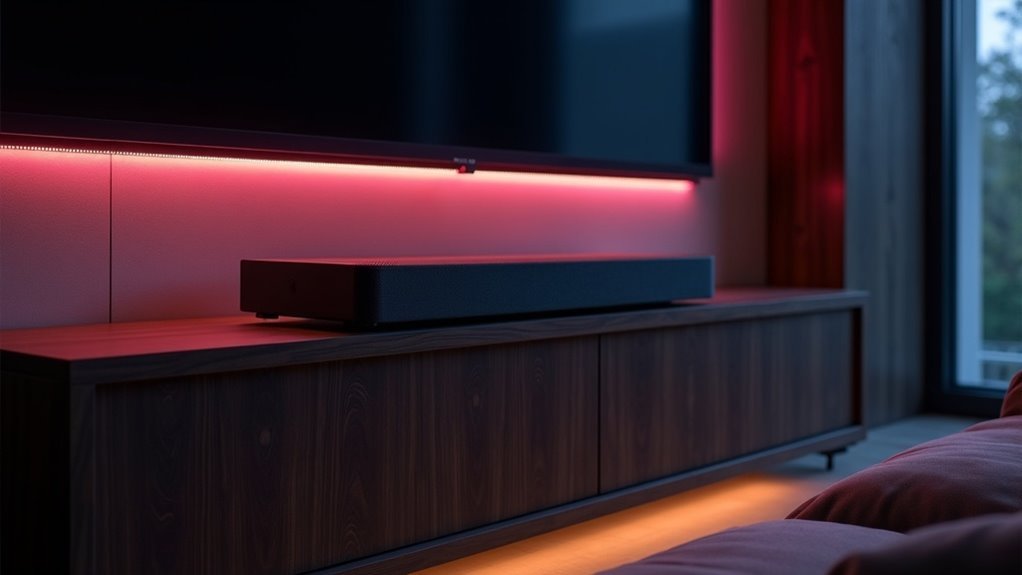
Wall-mounting your soundbar dramatically enhances sound projection by positioning it at ear level, which optimizes your audio experience.
It also creates a cleaner aesthetic by minimizing visible wires and clutter in your entertainment space.
Additionally, this installation saves space and allows for better alignment with your TV, ensuring that sound direction matches your viewing position for maximum clarity.
Improved Sound Projection
When you mount a soundbar at ear level, you significantly improve audio clarity and immersion. This optimal positioning enhances sound projection, creating a more engaging listening experience.
- Enhanced sound dispersion fills the room with rich, immersive audio.
- Elevating the soundbar reduces interference from furniture and other obstacles.
- Clearer audio output ensures you catch every nuance and detail in your favorite movies and music.
- Wall-mounting helps eliminate cable clutter, contributing to a sleek and organized setup.
- Most soundbars are designed with easy installation hardware and straightforward instructions for hassle-free mounting.
Aesthetic Appeal
Positioning a soundbar on the wall not only enhances audio performance but also significantly elevates the visual appeal of your entertainment space.
By utilizing a TV mount, you can eliminate visible cables, resulting in a cleaner, more organized look. When properly aligned with your TV, the mounted soundbar contributes to a cohesive, modern aesthetic that complements your decor.
Installing it at ear level optimizes sound projection while enriching the room’s ambiance. Moreover, wall mounts designed specifically for soundbars allow for easy adjustments and repositioning, ensuring optimal sound delivery without detracting from your interior design.
Integrating a soundbar into your wall design transforms your space into a more sophisticated and personalized environment.
Space-Saving Solution
By choosing to mount your soundbar instead of placing it on furniture, you effectively free up valuable floor space, which is especially beneficial in smaller rooms or minimalist setups.
Here’s why wall-mounting is a space-saving solution for soundbars:
- Enhances audio clarity by positioning the soundbar at ear level, providing an immersive listening experience.
- Aligns sound with the TV for ideal audio projection, ensuring that dialogue and effects are perfectly synchronized.
- Hides cables, reducing clutter and improving the overall aesthetics of your entertainment area.
- Protects against accidental tipping, safeguarding your soundbar investment from potential damage.
- Creates a clean, modern look that complements any decor, enhancing the visual appeal of your space.
With these advantages, wall-mounting your soundbar not only transforms your room but also elevates your audio experience.
Troubleshooting Common Installation Issues
Although troubleshooting soundbar installation issues can be frustrating, addressing common problems can often lead to a quick resolution.
If you hear no sound from your soundbar, first check that all cables are securely connected and that the soundbar’s input mode is correct. Restart your soundbar, TV, and connected devices to resolve connectivity issues.
Verify your TV’s audio output settings to ensure sound is directed to the soundbar instead of the built-in speakers. For Wi-Fi connections, confirm the SmartThings app is set up correctly.
Finally, if using HDMI, enable Anynet+ on the soundbar and HDMI-CEC on the TV for seamless communication.
User Experiences With Soundbar Setup
How easy is it to set up a soundbar? Most users find the installation process straightforward.
Here’s what you can expect when setting up your soundbar:
- Single HDMI or optical cable: Simply connect it to your TV for audio enhancement.
- Power connection: Plug it in, and you’re almost ready to enjoy immersive sound.
- SmartThings app: This app simplifies Wi-Fi setup, enabling seamless integration with multiple devices.
- Clear instructions: Most soundbars come with easy-to-follow guides to assist you during setup.
- DIY wall-mounting: Many users successfully handle this project themselves, allowing for a clean and stylish installation.
Enjoy the enhanced audio experience that a soundbar brings to your home entertainment!
Final Tips for a Successful Installation
When you’re preparing to install your soundbar, gathering all necessary cables and tools beforehand can make a significant difference in streamlining the process.
Verify you have HDMI, optical, or AUX cables, and a screwdriver if you plan to mount the soundbar. Familiarize yourself with the manual for specific connection methods that will ensure optimal audio performance.
If you choose to wall mount, locate studs or use drywall anchors for a secure attachment at ear level. Implement cable management solutions to keep wires organized and hidden, enhancing the aesthetic of your soundbar setup.
For optimal placement, mount your soundbar at ear level and manage cables for a clean, organized look.
Finally, test the soundbar by adjusting settings and confirming successful connectivity to achieve the best audio experience.