Placing a soundbar inside a closed cabinet isn’t recommended. It can lead to overheating due to restricted airflow and result in muffled audio from sound obstruction. For optimal performance, ensure at least 3 inches of clearance around the soundbar. Consider utilizing open shelves or wall mounting to enhance sound clarity and ventilation. If you’re looking for more tips and suitable soundbar models, there are additional resources available to elevate your audio experience.
Key Takeaways
- Soundbars can overheat in closed cabinets due to limited airflow, risking damage and decreased performance.
- Muffled sound quality may occur because cabinet walls can obstruct sound waves and create distortion.
- Remote control signals may be blocked by cabinet doors, complicating operation and adjustments.
- It’s crucial to maintain at least 3 inches of clearance above the soundbar for optimal ventilation and sound clarity.
- Regular monitoring of temperature and ensuring proper ventilation are essential for safe soundbar operation in a cabinet.
Pros of Placing a Soundbar in a Cabinet
When you place a soundbar in a cabinet, you not only keep it out of sight but also enhance the overall aesthetics of your living space. This setup protects the soundbar from dust and debris, ensuring its sound quality remains intact over time.
By enclosing the soundbar, you reduce visual clutter, allowing decorative elements to shine. A well-designed cabinet can blend seamlessly with your decor, creating a cohesive look that complements your audio setup.
Additionally, positioning the soundbar thoughtfully minimizes the visibility of wires and connections, contributing to a cleaner, more organized arrangement that serves both function and style effectively. This thoughtful placement can elevate your home audio experience while maintaining an elegant environment.
Cons of Placing a Soundbar in a Cabinet
While placing a soundbar in a cabinet offers aesthetic benefits, it also presents several drawbacks that can compromise your audio experience.
Placing a soundbar in a cabinet may look good, but it can significantly hinder your audio experience.
Here are some cons to consider:
- Muffled Sound: Enclosures can obstruct sound waves, leading to diminished audio clarity and an overall poorer listening experience.
- Overheating Risk: Closed cabinets limit ventilation, which can potentially cause overheating issues for your soundbar, affecting its performance and longevity.
- Remote Signal Blockage: Cabinet doors may block remote control signals, making it difficult to operate your soundbar effectively without opening the cabinet.
- Limited Accessibility: Adjusting settings and making connections might require navigating through confined spaces, complicating setup and maintenance.
To achieve the best placement for your soundbar, it’s essential to weigh these factors carefully to ensure optimal sound performance and convenience.
Features for Choosing a Cabinet for a Soundbar
Choosing the right cabinet for your soundbar can greatly enhance your audio experience and overall setup. When selecting a cabinet, ensure it provides ample space, allowing at least 3 inches of clearance for ventilation.
An open shelf style is ideal to promote airflow and prevent overheating, which is crucial for soundbar performance. Make sure there’s enough room for connections and cables to facilitate effortless setup and maintenance.
Additionally, opt for a cabinet that allows for a direct line of sight for remote control signals, avoiding any obstructions that could interfere with operation.
Finally, consider the cabinet’s aesthetic to complement your room, as a well-chosen cabinet can enhance both functionality and the visual appeal of your soundbar setup.
Alternative Placement Options for a Soundbar
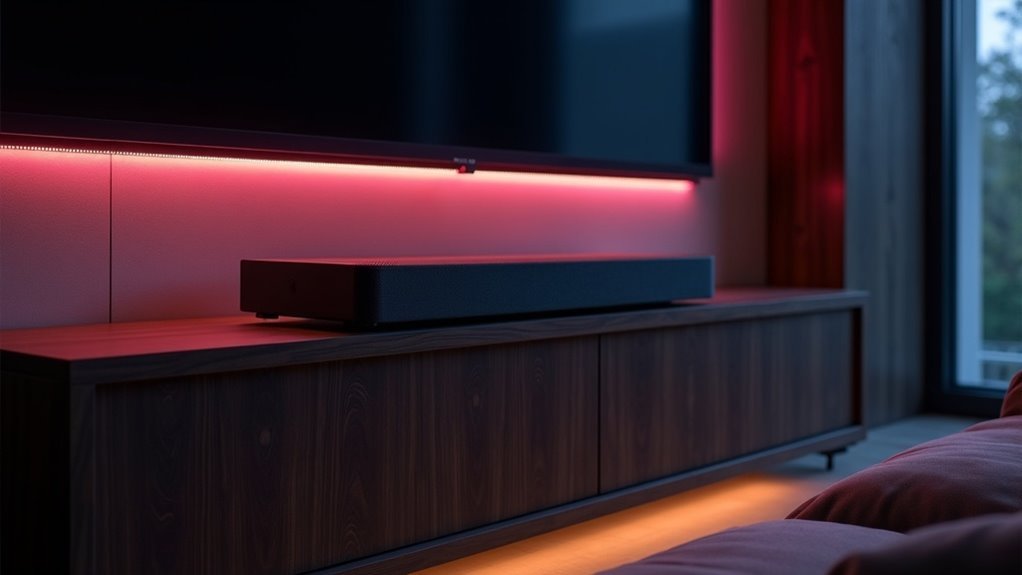
When considering alternative placement options for your soundbar, mounting it directly below or above your TV can significantly enhance audio clarity.
An open shelf provides ideal airflow, reducing overheating and improving sound quality compared to closed cabinets.
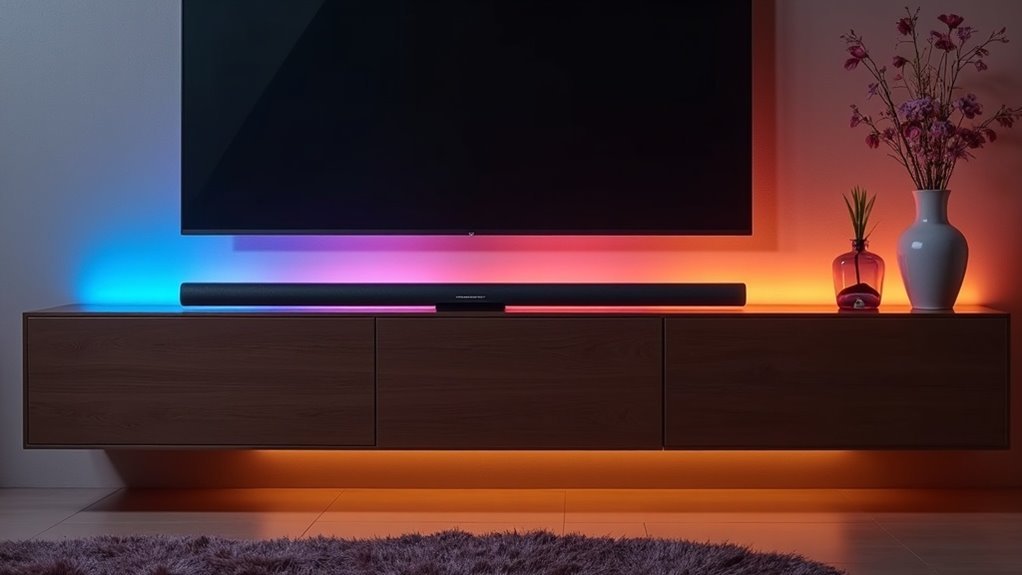
Additionally, floating entertainment stands offer a modern aesthetic while ensuring your soundbar remains accessible and unobstructed, optimizing your home audio experience.
Mounting Below the TV
Many homeowners find that mounting a soundbar directly below the TV is an effective way to enhance their audio experience. This placement aligns the soundbar with the viewer’s ear level, improving sound clarity.
Here are four benefits to consider:
- Unobstructed Audio: Keeps sound directed towards the audience, free from interference.
- Aesthetic Integration: Creates a streamlined look with the TV setup, making the soundbar a natural part of the overall design.
- Proper Ventilation: Ensures sufficient clearance to prevent overheating, allowing the soundbar to perform optimally.
- Easy Access: Simplifies connections to ports and cables, easing the process of maintenance and setup.
Open Shelf Placement
Mounting a soundbar below the TV is a popular choice, but open shelf placement offers distinct advantages worth considering for your soundbar setup.
This configuration allows for ideal airflow, reducing overheating risks and enhancing sound quality. You’ll enjoy direct access for adjustments and unobstructed remote control functionality, ensuring an optimal user experience.
Additionally, the soundbar can project audio directly toward the listening area, boosting clarity and performance for an immersive sound experience.
Open shelves also provide space for additional audio-visual equipment and proper cable management, keeping your area tidy and organized.
Aesthetically, open shelf placement aligns with modern interior design trends, marrying functionality with style to serve both your audio needs and home decor aspirations.
Floating Entertainment Stands
If you’re in search of an optimal placement solution for your soundbar, floating entertainment stands present an excellent choice. These stands enhance audio clarity by positioning your soundbar at ear level, providing an ideal listening experience.
Here are four key benefits of floating entertainment stands specifically tailored for soundbars:
- Open Shelving: Encourages airflow around your soundbar, preventing overheating and maintaining optimal performance.
- Cable Management: Keeps cords organized and hidden from view, enhancing the overall aesthetics of your soundbar setup.
- Versatility: Complements a variety of decor styles while maximizing floor space, allowing you to showcase your soundbar elegantly.
- Sound Quality: Minimizes the risk of sound muffling that can occur in enclosed spaces, ensuring crystal-clear audio for all your entertainment needs.
Opting for floating entertainment stands is a savvy way to enhance your soundbar setup and elevate your overall home entertainment experience.
Sound Quality Considerations
When you place a soundbar in a closed cabinet, you might experience muffled audio effects due to restricted airflow and sound reflections.
This setup can also obstruct remote signals, making it challenging to control your device. Furthermore, the risk of overheating increases, which could lead to potential damage if proper ventilation isn’t provided.
To ensure the best sound quality, it’s advisable to position your soundbar in an open space where it can perform optimally.
Muffled Audio Effects
While it may seem convenient to place a soundbar inside a closed cabinet, doing so can significantly hinder audio quality.
You may encounter muffled audio effects for several reasons:
- The enclosure can restrict sound waves, leading to distorted audio.
- Cabinet walls create a “box-in-a-box” effect, which can compromise the bass response.
- The direct line of sight to the soundbar’s speakers is obstructed, affecting clarity.
- Limited airflow may cause heat buildup, which can further impact sound performance.
For optimal sound quality, it’s best to position your soundbar in an open space or ensure at least 3 inches of clearance around it.
This approach will enhance audio clarity and provide a superior listening experience for all.
Overheating Risks
Placing a soundbar inside a closed cabinet can lead to serious overheating risks that compromise both sound quality and longevity.
Soundbars generate heat during operation, and insufficient ventilation can trap this heat, leading to damage. Most soundbars require a minimum clearance of 3 inches for proper airflow, which is often hard to achieve in enclosed spaces.
Overheating not only distorts sound and reduces performance but can also cause premature failure. Additionally, the “box-in-a-box” effect can muffle audio, creating a less immersive experience.
If you must use a cabinet, ensure adequate ventilation and regularly monitor the soundbar’s temperature to mitigate overheating risks.
Remote Signal Obstruction
Remote signal obstruction is a significant concern when using soundbars placed inside closed cabinets, as it can severely limit the effectiveness of your remote control.
To enhance your soundbar experience, consider the following:
- Ensure a direct line of sight for IR remotes by leaving cabinet doors open during use.
- Opt for soundbars with Bluetooth or Wi-Fi connectivity to minimize reliance on IR signals.
- Install a remote control extender to effectively bypass signal obstruction.
- Incorporate a smart home system to control your soundbar without the need for a physical remote.
Installation and Setup Tips
When setting up your soundbar in a closed cabinet for optimal performance, follow these tips.
First, ensure there’s at least 3 inches of clearance above the soundbar to allow for proper ventilation and prevent overheating.
Position the soundbar as far forward as possible to reduce sound obstruction, which will enhance audio clarity.
Avoid placing cabinet doors directly in front of the soundbar to ensure unobstructed remote signal transmission and sound projection.
To improve sound quality, use rubber feet or isolation pads to decouple the soundbar from the cabinet, which helps reduce vibrations.
Additionally, consider using an open shelf or a mesh door design to promote better airflow, ensuring your soundbar performs at its best.
Recommended Soundbar Models and Brands
Choosing the right soundbar for a closed cabinet setup can significantly enhance your audio experience.
Here are some recommended soundbar models and brands that perform well in such environments:
- Samsung HW-T650: A 3.1 channel configuration ensures clear dialogue, perfect for movie nights.
- Samsung HW-S60T: Its sleek, compact design minimizes sound degradation, making it ideal for smaller spaces.
- Sonos Beam: This model offers voice control and high-quality audio integration, perfect for smart home setups.
- Bose Soundbar 700: Known for its exceptional sound quality, it’s advisable to ensure proper ventilation for optimal performance.
Each of these options strikes a balance between performance and design, providing ideal audio enjoyment without compromising on space or style.