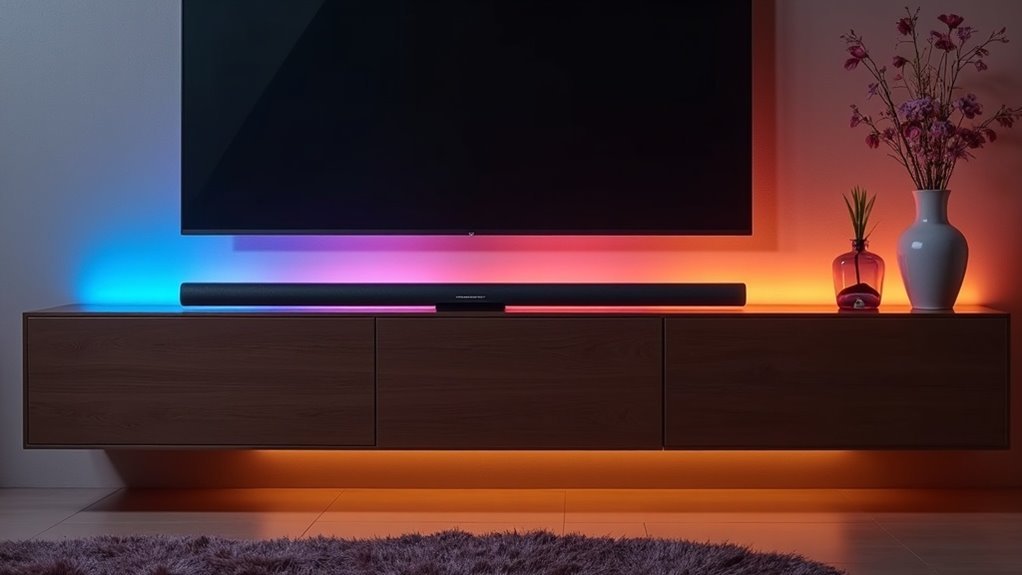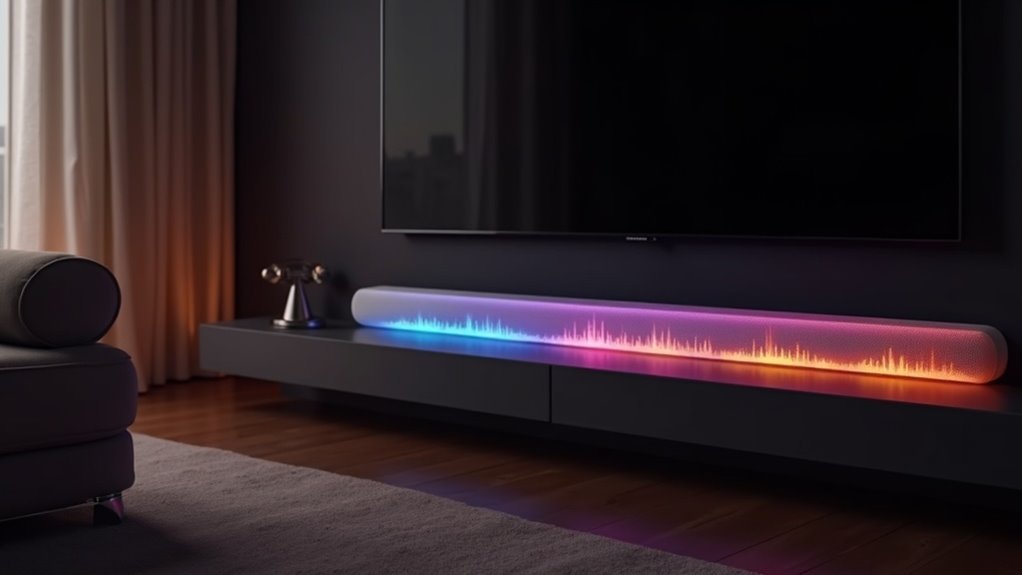
Soundbar time alignment ensures that audio signals from various drivers reach your ears at the same time, which significantly enhances sound clarity and coherence. By synchronizing these audio signals, time alignment improves localization and stereo imaging, leading to a more immersive listening experience. Techniques such as optimized driver placement and advanced digital signal processing automatically adjust delays based on the distances between speakers, effectively minimizing phase issues. This results in clearer dialogue and a cohesive sound field that simulates surround sound. Discover how these innovations can elevate your soundbar audio experience even further.
Key Takeaways
- Soundbar time alignment is a crucial feature that ensures all drivers deliver audio simultaneously, which enhances coherence and clarity in sound reproduction.
- It effectively addresses timing discrepancies that can impact sound localization and stereo imaging, resulting in a more immersive listening experience.
- Utilizing advanced digital signal processing techniques, soundbars automatically adjust delays based on the distances between drivers for optimal synchronization.
- Proper time alignment minimizes phase issues, leading to clearer dialogue and a cohesive sound field that emulates surround sound.
- To achieve effective time alignment adjustments, accurate distance measurements from the listening position to each speaker in the soundbar are essential.
Understanding Soundbar Time Alignment
When exploring the intricacies of soundbar audio reproduction, understanding soundbar time alignment is crucial for achieving optimal sound quality.
Time alignment ensures that audio signals from the various drivers within your soundbar reach your ears simultaneously, which enhances both coherence and clarity. Even slight timing discrepancies can negatively affect sound localization and stereo imaging, ultimately diminishing your overall listening experience.
Many soundbars employ advanced digital signal processing techniques to adjust time alignment according to the physical distances between drivers. By aligning the acoustic centers of the speaker system, soundbars effectively minimize phase issues, significantly enhancing the perception of surround sound effects and creating a more immersive audio environment.
Importance of Synchronizing Audio
Synchronizing audio in soundbars is crucial for delivering a seamless auditory experience that matches the on-screen action.
Even a timing difference as small as 0.1-0.2 milliseconds can significantly impact how you perceive sound directionality, making precise audio alignment essential.
Soundbars that feature time alignment technology effectively address phase issues, enhancing the sound stage and providing clearer audio output.
Proper synchronization minimizes sound blurring, which occurs when audio signals reach listeners at different times.
Many advanced soundbars leverage digital signal processing (DSP) to automatically adjust delays, ensuring you enjoy an immersive sound experience that truly elevates your entertainment.
Techniques for Achieving Time Alignment
Achieving time alignment in soundbars is essential for delivering an optimal audio experience. Here are some effective techniques to enhance your soundbar’s performance:
- Optimize Driver Placement: Positioning tweeters at the front helps minimize timing discrepancies with woofers, ensuring a more synchronized sound output.
- Utilize Calibration Microphones: Many soundbars come equipped with built-in microphones that can measure room acoustics. This feature allows for automatic adjustments to the timing of each speaker component, enhancing overall sound quality.
- Implement Proprietary Algorithms: Some soundbars utilize advanced algorithms that analyze audio input in real-time, dynamically adjusting timing to reduce latency and improve synchronization.
Measuring Distances for Optimal Setup
To guarantee ideal soundbar performance, accurately measuring the distance from your listening position to each speaker is essential.
The speed of sound, approximately 343 meters per second, helps you calculate the necessary delays for each speaker. Use the formula Distance (in meters) / 343 * 1000 to determine delay in milliseconds.
For instance, if your soundbar is 4 meters away and a rear speaker is 3 meters away, the rear speaker needs a delay of about 2.915 milliseconds.
Ensure consistent measurements across all speakers, and remember to account for any additional delays required by subwoofers for optimal time alignment, especially when setting up your soundbar system.
Enhancing Your Audio Experience
Once you’ve measured the distances for ideal soundbar placement, enhancing your audio experience hinges on effective soundbar time alignment.
When audio signals from different drivers within the soundbar arrive simultaneously, you’ll enjoy clearer dialogue and immersive soundscapes. Accurate alignment minimizes phase issues, ensuring you experience distinct sounds from various components without blurring.
- Utilize advanced DSP techniques for precision.
- Create a cohesive sound field that mimics surround sound.
- Elevate your enjoyment of movies and music with enhanced clarity.
With soundbar time alignment, you transform your listening environment, delivering richer, more engaging audio that truly enhances your overall experience.