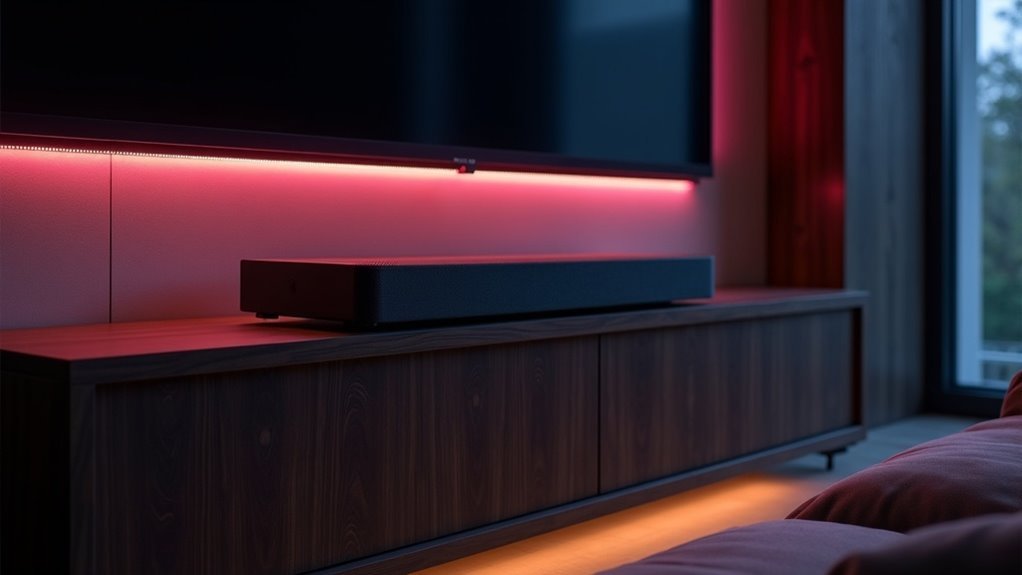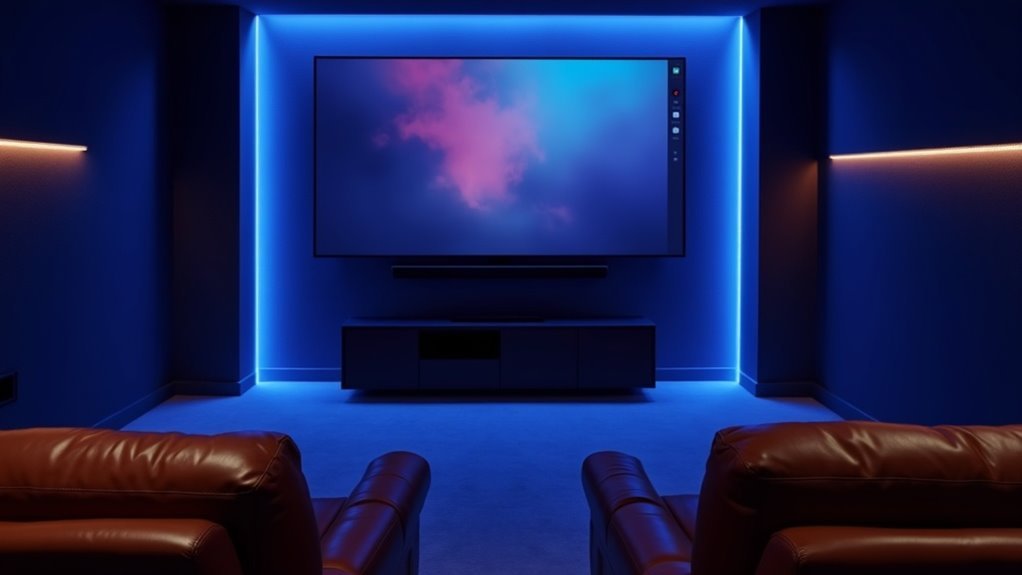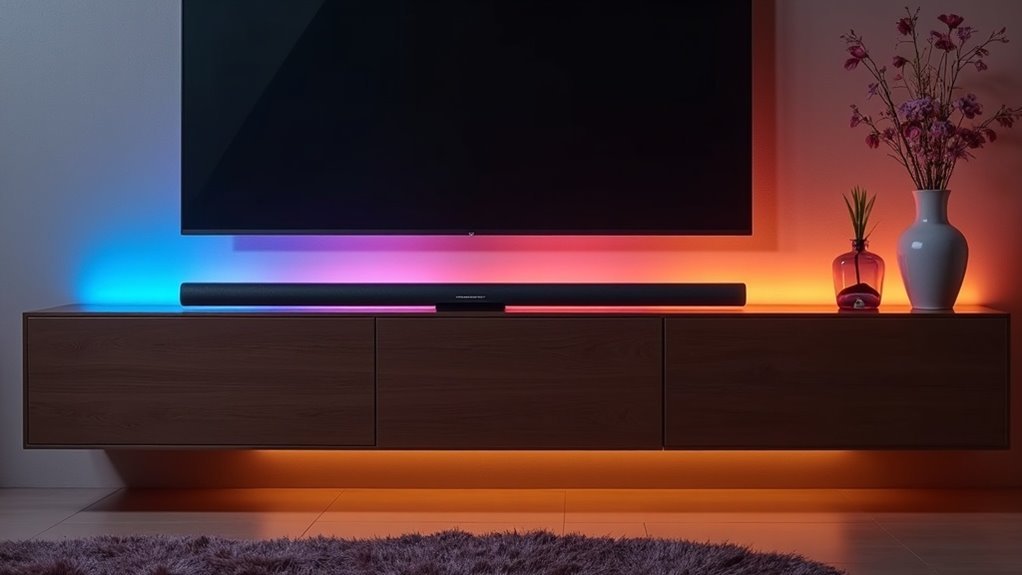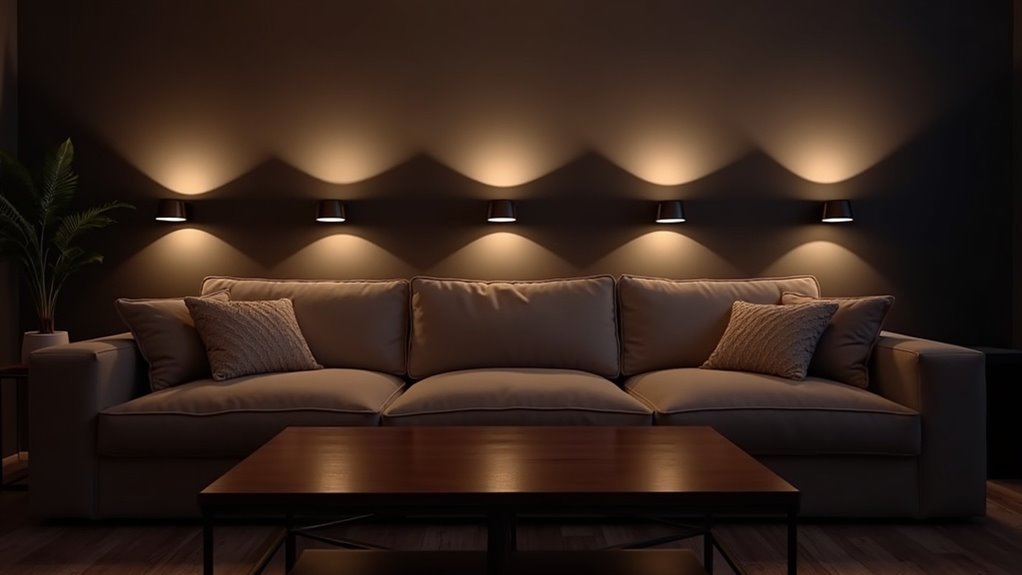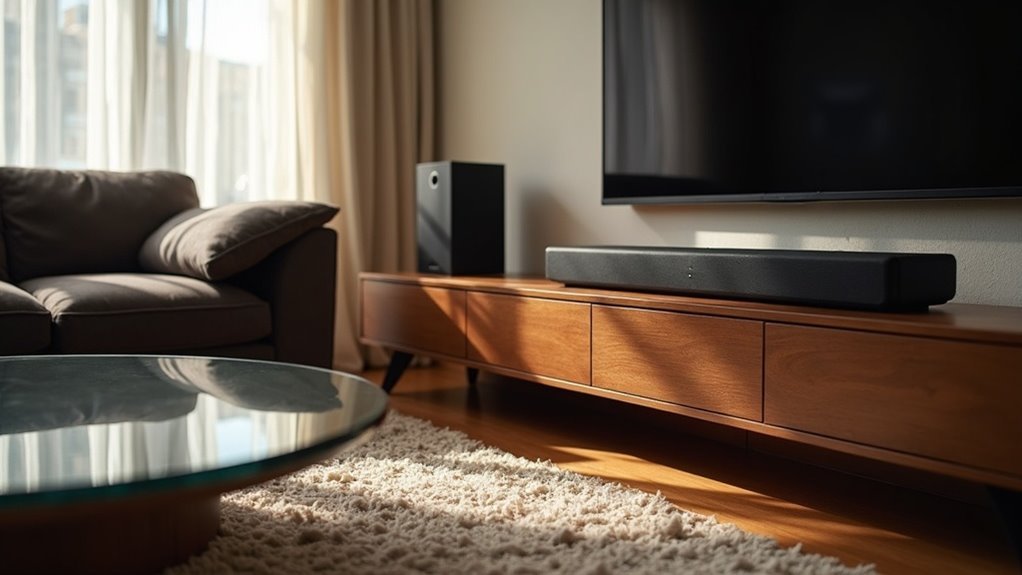
The materials around your soundbar significantly impact its acoustics. Hard surfaces, such as walls and furniture, reflect sound waves, leading to muddiness and increased echo. Conversely, soft materials like curtains, carpets, and upholstered furniture absorb sound, enhancing clarity and reducing reverberation. To maximize performance, position your soundbar at ear level and consider using acoustic panels to optimize audio quality. Understanding these factors can greatly enhance your listening experience with soundbars.
Key Takeaways
- Soft materials like curtains and carpets absorb sound, which helps to reduce echo and improve acoustic clarity around the soundbar, enhancing your listening experience.
- It’s best to avoid hard surfaces near the soundbar, as they can cause sound reflection that leads to distortion and a less enjoyable audio experience.
- Installing acoustic panels on walls can significantly enhance the absorption of mid to high frequencies, optimizing the overall sound quality of your soundbar setup.
- Positioning the soundbar at ear level is crucial for clearer sound projection and minimizing any obstructions that could interfere with audio clarity.
- Incorporating diffusive elements, such as bookshelves, can scatter sound waves effectively, further enhancing your overall audio experience with the soundbar.
Understanding Sound Reflection and Absorption
Understanding sound reflection and absorption is essential for optimizing audio quality when using soundbars in your space.
Sound reflection occurs when sound waves bounce off hard surfaces, creating unwanted reflections and echo that can muddle the audio playback from your soundbar. To counteract this, incorporating porous materials like fiberglass or mineral wool in your room can enhance sound absorption across various frequencies, improving overall acoustic properties.
Sound reflection can disrupt soundbar audio; using porous materials enhances absorption and improves room acoustics.
Additionally, room dimensions greatly impact sound behavior; larger spaces may amplify echo, while smaller rooms can face rapid reflections that interfere with the soundbar’s performance.
You’ll also find that surface texture matters—rough surfaces can help diffuse sound waves, enhancing clarity and allowing your soundbar to deliver a more immersive audio experience, while flat, hard surfaces may contribute to audio distortions, ultimately affecting sound quality.
The Role of Hard Surfaces in Sound Quality
Hard surfaces in a room can significantly affect the sound quality of your soundbar by promoting reflection instead of absorption. When sound waves produced by the soundbar hit these hard materials, they reflect back, creating increased echo and reverberation.
This can lead to muddiness and a lack of clarity, particularly in the lower frequencies. You may also experience uneven sound distribution due to the resistance that hard surfaces present, which can result in phase cancellation where some frequencies are highlighted while others diminish.
To enhance your audio experience with your soundbar, it’s beneficial to incorporate acoustic panels or softer materials like carpets. This noise control strategy can effectively absorb unwanted sound reflections, improving overall sound quality and clarity from your soundbar.
Impact of Soft Materials on Acoustics
While hard surfaces can pose challenges for sound clarity in soundbar setups, soft materials provide an effective solution by absorbing sound waves. Incorporating sound-absorbing elements like curtains, upholstered furniture, and carpets can significantly reduce echo and reverberation in your audio environment, enhancing the performance of your soundbar.
Using fabrics with high sound absorption capabilities, such as wool or felt, strategically placed around your soundbar, minimizes sound distortion and elevates your listening experience. Additionally, soft wall coverings, such as acoustic panels made from foam or fiberglass, are particularly effective at absorbing mid to high frequencies, further enhancing sound quality.
Ultimately, these materials help diminish sound reflections, leading to a more balanced and enjoyable audio experience when using your soundbar.
Strategic Arrangement for Optimal Sound
Achieving ideal sound quality from your soundbar often hinges on its strategic arrangement within the room.
Positioning sound-absorbing materials, like acoustic panels, behind and beside the soundbar minimizes reflections from hard surfaces that can distort audio clarity.
Ensure the soundbar aligns with your ear level to optimize sound projection and reduce interference from surrounding furniture.
Incorporating diffusive elements, such as bookshelves, helps scatter sound waves evenly, enhancing overall room acoustics.
Be mindful of reflective surfaces, as they can lead to increased reverberation, negatively impacting your listening experience.
A thoughtful arrangement can markedly elevate your soundbar’s audio performance and enjoyment.
Best Practices for Enhancing Soundbar Performance
To enhance your soundbar’s performance effectively, consider the materials and surroundings that directly influence audio quality.
Use soft furnishings like curtains and carpets to absorb sound, minimizing echo and improving clarity. Avoid positioning your soundbar near hard surfaces, as they reflect sound waves, causing distortion.
Enhance acoustic performance by installing acoustic panels on nearby walls, effectively absorbing sound. Optimize speaker placement by elevating the soundbar to ear level, allowing unobstructed sound wave travel.
Additionally, incorporate bass traps in room corners to manage low-frequency sounds and prevent muddiness, contributing to a higher noise reduction coefficient (NRC) and overall sound fidelity.