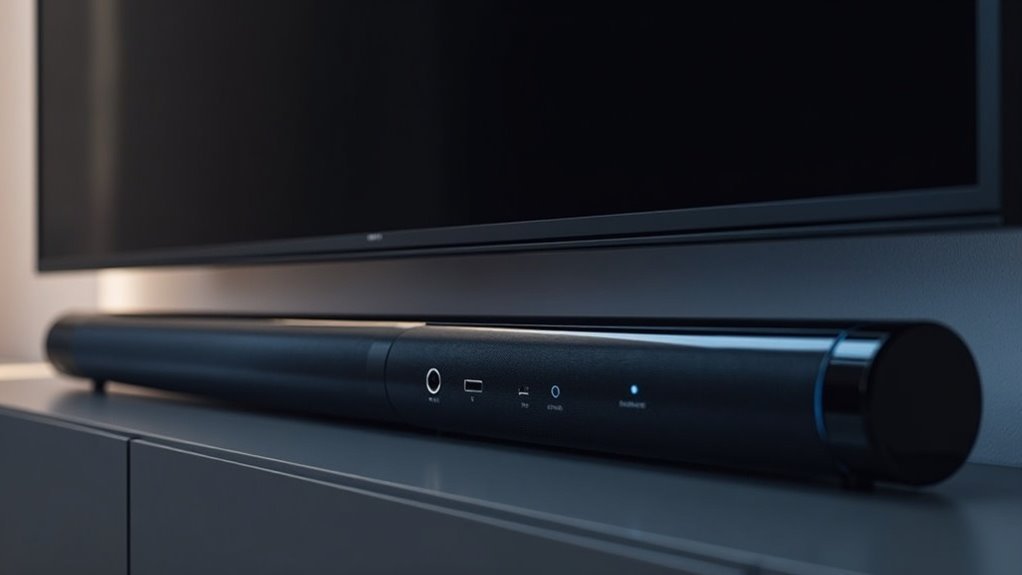
To reduce audio latency in your soundbar setup, opt for direct connections like HDMI or optical. These methods often achieve latency under 1 ms, ensuring a more synchronized audio experience. In contrast, HDMI ARC can introduce delays, affecting AV sync. If you’re a gamer or a film enthusiast, minimizing latency will greatly enhance immersion. Additionally, there are soundbar models specifically designed with low latency features, which you can explore to further optimize your audio performance.
Key Takeaways
- Direct connections provide the lowest latency for soundbars, often achieving under 1 ms, which enhances audio synchronization.
- HDMI ARC can introduce latency due to TV processing, potentially leading to AV sync issues with soundbars.
- Optical connections typically offer low latency, making them a solid alternative for soundbar setups.
- Using PCM audio formats over HDMI ARC can help reduce latency, improving overall audio response for soundbars.
- Bluetooth connections may introduce higher latency, making them less ideal for synchronized audio playback with soundbars.
Understanding Audio Latency in Soundbars
When it comes to soundbars, understanding audio latency is essential for a superior viewing experience.
Audio latency refers to the time taken for your soundbar to process and output audio signals. Higher latency can lead to noticeable AV sync errors, disrupting your enjoyment.
Testing shows that PCM audio formats typically offer the lowest latency, while Dolby Digital may introduce delays due to decompression needs.
For peak performance, choose soundbars with audio latency under 100 ms, especially if you’re gaming.
Soundbars supporting high bandwidth video pass-through often add less than 1 ms of latency, greatly enhancing synchronization with video content.
Connection Methods: HDMI ARC vs. Direct
When you connect your soundbar via HDMI ARC, you might encounter latency issues due to the extra processing by the TV.
In contrast, a direct connection to your source device minimizes audio lag, often achieving latency levels under 1 ms.
For soundbar applications where audio synchronization is vital, opting for direct connections can greatly enhance your listening experience.
HDMI ARC Limitations
While HDMI ARC is designed to simplify audio connections and improve synchronization, it often encounters limitations that can affect your soundbar experience.
Here are some key considerations:
- The audio signal processing by your TV can introduce delays, impacting the performance of your soundbar.
- AV synchronization issues may hinder the overall viewing and listening experience.
- Higher latency in HDMI ARC connections compared to direct connections can negatively affect gameplay, especially for gamers relying on clear audio cues.
- Not all soundbars support direct connections, which can restrict your options for optimal audio performance.
In summary, while HDMI ARC offers convenience, it may not provide the audio quality and synchronization you desire for an immersive soundbar experience.
Consider direct connections to achieve superior audio performance and enhance your overall enjoyment.
Direct Connection Benefits
Connecting your soundbar directly to the audio source can significantly enhance your listening experience by minimizing audio latency and improving AV synchronization.
This method, especially through an optical connection, eliminates the TV’s processing delays, ensuring that audio and video remain perfectly in sync. Unlike HDMI ARC, which can introduce latency due to additional processing, a direct connection provides a more efficient signal path.
Soundbars designed for direct connections often support audio formats like PCM, resulting in lower latency. For optimal performance, choose soundbars that facilitate this setup to deliver seamless audio, thereby enriching your overall media enjoyment.
Advantages of Direct Connections
Direct connections to your soundbar offer significant advantages, particularly in improving audio synchronization.
By minimizing latency issues, you’ll experience a more immediate audio response that enhances your overall viewing and gaming experience with your soundbar.
This streamlined setup guarantees that you stay in sync with fast-paced action, which is essential for competitive play and elevates your soundbar’s performance.
Improved Audio Sync
When you connect your source directly to the soundbar, you significantly improve audio synchronization. This direct connection reduces AV sync errors, resulting in a superior digital audio experience.
Here are some key benefits for soundbar enthusiasts:
- Reduced Processing Time: A direct link means less delay from source to soundbar, providing quicker audio response.
- Lower Latency: Opt for soundbars with latency under 100 ms for an optimal listening experience.
- Enhanced Audio Sync: Perfectly timed sound elevates your immersion in movies and music.
- High Bandwidth Pass-Through: Maintains video quality while ensuring rich audio performance without compromises.
Reduced Latency Issues
Because audio latency can disrupt your viewing and listening experience, utilizing a soundbar with a direct source connection offers significant advantages.
Connecting directly, particularly via optical, minimizes the audio processing delays often introduced by HDMI ARC through your TV. This reduction in latency enhances AV synchronization, allowing you to enjoy high-quality audio formats like PCM with less than 1 ms latency.
Enhanced Gaming Experience
For gamers looking to elevate their experience, connecting your gaming source directly to a soundbar can significantly enhance audio performance while minimizing latency.
Here are four key benefits of this setup:
- Less than 1 ms latency ensures rapid audio feedback, which is crucial for competitive gaming.
- Optical pass preserves high audio quality, allowing sound to synchronize perfectly with on-screen action.
- High bandwidth video pass-through supports low latency, optimizing overall gameplay performance.
- Reduced AV sync errors means you won’t miss critical moments during intense gaming sessions.
Impact of HDMI ARC on AV Synchronization
While HDMI ARC (Audio Return Channel) provides a convenient way to send audio from your TV to a soundbar, it can sometimes cause latency issues that affect AV synchronization. The processing time of the TV may increase latency compared to a direct connection, leading to noticeable AV sync errors during playback.
To improve this, it’s advisable to connect your source device directly to the soundbar before sending the video signal to the TV.
For optimal audio performance, connect your source device directly to the soundbar before routing the video to the TV.
Furthermore, using audio formats such as PCM can help reduce latency over HDMI ARC, whereas formats like Dolby Digital might exacerbate synchronization issues.
Opting for soundbars that support direct connections can enhance performance and ensure a seamless viewing experience.
Recommended Soundbars for Low Latency
When selecting a soundbar for low latency, it’s crucial to consider models that excel in both audio processing and video pass-through capabilities.
Here are some top recommendations:
- Samsung HW-Q990F: Renowned for its Dolby Atmos support and low latency, this soundbar enhances your cinematic experience.
- LG S90TR: This model features high bandwidth video pass-through, making it perfect for 4K content.
- Supports PCM Audio: PCM audio format consistently demonstrates the lowest latency, helping to minimize AV sync issues.
- Latency Under 100 ms: Ideal for gaming and movie-watching, ensuring that audio syncs perfectly with visuals.
Choose wisely to elevate your audio experience with the right soundbar!
Future Trends in Soundbar Technology
As the demand for high-quality audiovisual experiences continues to rise, soundbar technology is set to evolve considerably in the coming years.
Expect enhanced support for higher bandwidth video pass-through, which minimizes latency and improves synchronization with video content. Manufacturers will likely focus on soundbars that support 4K signals at 120 Hz, catering to discerning viewers who seek top-notch performance.
Innovations in audio processing algorithms aim for sub 100 ms latency, which will become the new standard for soundbars. Advanced connectivity options like Wi-Fi and Bluetooth will reduce reliance on HDMI ARC, further decreasing audio latency, making setup simpler for users.
As gaming continues to expand in popularity, low-latency performance will be prioritized in soundbars, enhancing the immersive audio experiences for gamers and ensuring they get the most out of their gaming sessions.