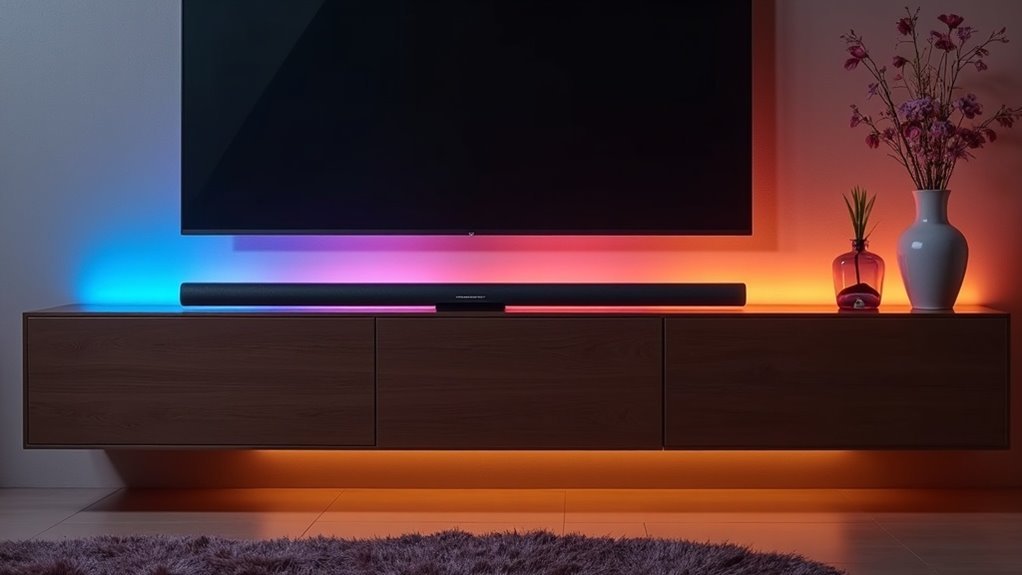
A soundbar can pass through Dolby Vision, but it must have the right HDMI specifications, such as HDMI 2.0 or 2.1, and support for Dolby Vision passthrough. Ensure your soundbar features an HDMI ARC or eARC port for optimal performance. If your soundbar does not support Dolby Vision, it’s best to connect your streaming device directly to your TV. For more information on compatible soundbars and setup tips, be sure to explore additional resources on this website.
Key Takeaways
- Not all soundbars support Dolby Vision passthrough; check the specific model’s compatibility before making a purchase.
- Ensure the soundbar is equipped with HDMI 2.0 or 2.1 ports to handle high-bandwidth content effectively.
- For optimal audio and video transmission, HDMI ARC or eARC connections are recommended.
- Always use high-quality HDMI cables rated for 18 Gbps to prevent any signal degradation.
- Make sure to verify the soundbar’s specifications to confirm its support for both Dolby Vision and Dolby Atmos.
Understanding Dolby Vision and Soundbars
When enhancing your home theater setup, it’s crucial to understand how Dolby Vision interacts with soundbars.
Dolby Vision is a premium HDR format that significantly improves color and contrast, providing an immersive viewing experience. Many soundbars come with Dolby Vision passthrough, but it’s important to ensure that their HDMI ports are compatible with HDMI 2.0 or HDMI 2.1 to handle high-bandwidth content effectively.
Some soundbars may have limitations on supporting both Dolby Vision and Dolby Atmos simultaneously, which can affect your overall audio-visual performance. To achieve the best quality, connect your soundbar to your TV using HDMI ARC or eARC.
Additionally, using high-speed HDMI cables rated for 18 Gbps is essential to avoid any issues with Dolby Vision passthrough.
Key Features to Look for in a Soundbar
Choosing the right soundbar can greatly enhance your home entertainment experience. To ensure you maximize your setup, consider these essential features:
- Dolby Vision Compatibility: Opt for soundbars that are specifically labeled as Dolby Vision compatible, which ensures you receive top-tier video quality.
- HDMI ARC or eARC Support: Look for soundbars with HDMI ARC or eARC support, as these features facilitate seamless audio and video transmission while preserving Dolby Vision quality.
- Multiple HDMI Inputs: Make sure your soundbar comes with an adequate number of HDMI inputs, allowing you to connect various devices without sacrificing immersive audio or video quality.
Connecting Your Soundbar for Best Performance
To achieve ideal performance from your soundbar, it’s crucial to make the right connections that support Dolby Vision passthrough.
Verify that your soundbar is equipped with HDMI 2.0 or HDMI 2.1 ports, particularly with an ARC/eARC port for seamless audio and video transfer.
Ensure your soundbar features HDMI 2.0 or 2.1 ports, especially an ARC/eARC port for optimal audio and video performance.
When connecting a streaming device like Apple TV 4K, be sure to use HDMI cables rated for 18 Gbps to manage the bandwidth required for Dolby Vision.
If your soundbar doesn’t support Dolby Vision, connect the streaming device directly to your TV and use HDMI ARC for audio.
Always check your soundbar’s specifications to confirm its compatibility with the passthrough feature to ensure the best home theater experience.
Troubleshooting Dolby Vision Issues
Although enjoying Dolby Vision through your soundbar should be seamless, various issues can arise that hinder ideal performance. To troubleshoot effectively, consider these steps specific to soundbars:
- Check Compatibility: Verify that your soundbar supports Dolby Vision passthrough. Some soundbars may only output 1080p, which limits their ability to handle 4K content effectively.
- Inspect HDMI Cables: Ensure you’re using high-quality HDMI cables that are rated for 18 Gbps. This helps prevent signal degradation that can affect video and audio quality.
- Adjust Settings: Reset your soundbar and any connected devices. Additionally, modify the HDMI Deep Colour settings, as this may resolve any output issues you’re experiencing.
Recommendations for Compatible Devices
When selecting soundbars for ideal Dolby Vision passthrough, evaluating compatibility is crucial.
Look for soundbars, such as those from Sony, that support Dolby Vision to enhance your home entertainment system’s video quality. Ensure your HDMI inputs are rated for at least 18 Gbps to optimize performance.
Choose soundbars that support Dolby Vision and ensure HDMI inputs are rated for 18 Gbps for optimal video performance.
Additionally, consider compatible devices, particularly the Sony Bravia series TVs, which are designed to work seamlessly with Dolby Vision soundbars.
Always check the specifications of both the soundbar and your existing devices before purchasing to prevent passthrough issues and maintain exceptional video quality.